
Scenic Augmented Reality
A social networking platform that allows VTubers & avatar creators to make short 3D augmented reality scenes using their virtual character. Avatar scenes published on the service can be replayed and watched in AR as unique form of 3D media, similar to personalized hologram recordings.
Role: UI/UX Design, Project Manager
Year: 2021-Present
Collaborators: Philip Hahs, Farshid Hamidi, Luis Noriega, Mikhaella Ponce de Leon
My Role & The Team Structure
I was responsible for setting the long-term product vision and defining the scope of the project as co-founder and UX lead, I shaped the experience of the app end-to-end, from avatar uploads, to AR scene recording, to publishing and playback. During the technical development stage of the app, I worked closely with a small distributed engineering team to bring the service to life.
Because Scenic evolved over several years, the role required both product management and design leadership. I prioritized features, managed tradeoffs between performance and flexibility, wrote product specs, designed key interfaces, and worked closely with Unity and backend engineers to ensure the service’s feasibility across different devices. Design and development were tightly interwoven throughout this process.
Early Experimentation
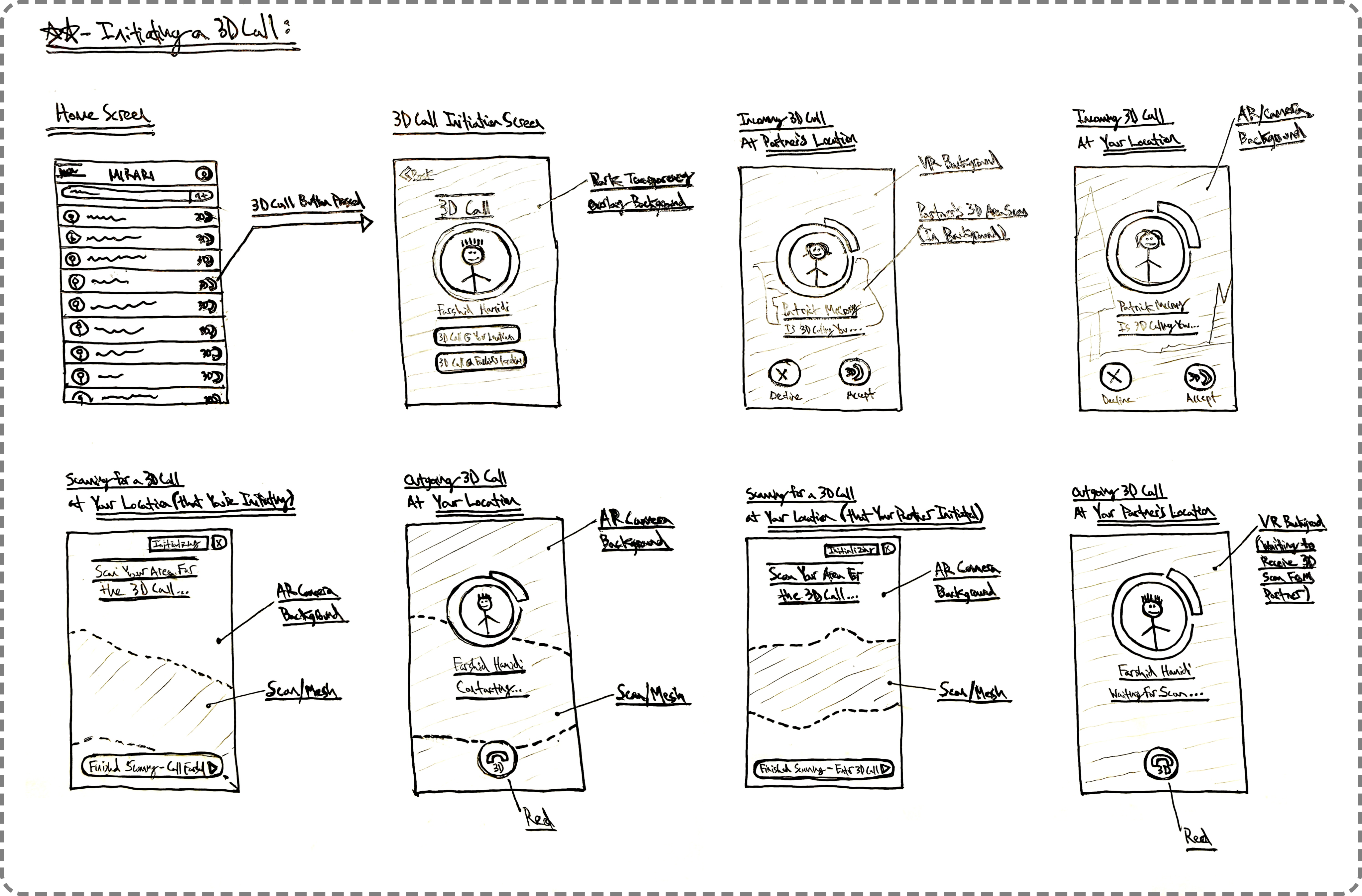
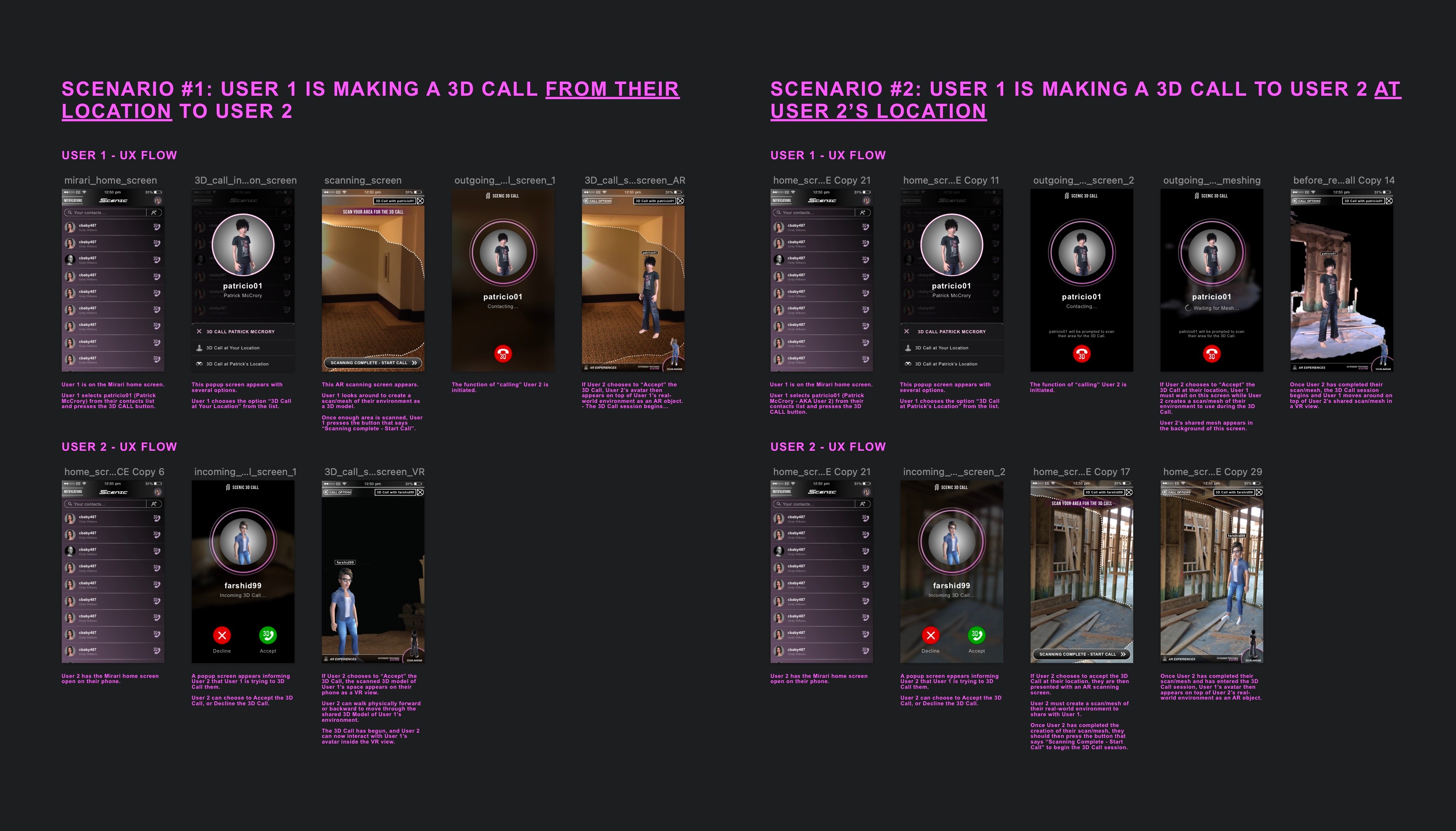
Scenic did not begin as a platform for 3D recordings. Our initial design was for a service that allowed multiple people to use an avatar to make a spatial “3D Call” to each other, allowing you to pop up in someone else’s real world space as a virtual character, and interact in real-time with them.I made a number of UI sketches & full designs for this direction for the product, a few of which are shown below. We also did a significant prototype build out and had a semi-working version of this service.Unfortunately the “real-time” nature fo this concept introduced a number of user experience issues that proved very difficult to resolve, so we moved on to the final form of Scenic, which revolved around allowing avatar creators to make 3D scene recordings in AR.
The Product Vision
Our goal for Scenic became clear: reduce the friction of avatar-based performances while pushing a more immersive type of short-form content.
As VTubing has grown, most workflows still remain tied to desktop streaming setups and live broadcasts, limiting accessibility. At the same time, platforms like VRChat demonstrated the appeal of embodied 3D presence, but those experiences are mostly synchronous, and are “virtual worlds” making it not so quick to get in and out of.
Scenic explored a hybrid model: a platform for immersive 3D performances created on mobile and distributed asynchronously. By allowing users to record spatial avatar performances in AR and publish them as replayable scenes, the platform combined the accessibility of short-form video with the presence of embodied 3D worlds.
The idea of “hologram recordings” has existed in science fiction for a long time; the video below shows a few examples that capture the type of experience we want to make real in the near future, starting with 3D VTubers.
Creating The Scenic UI
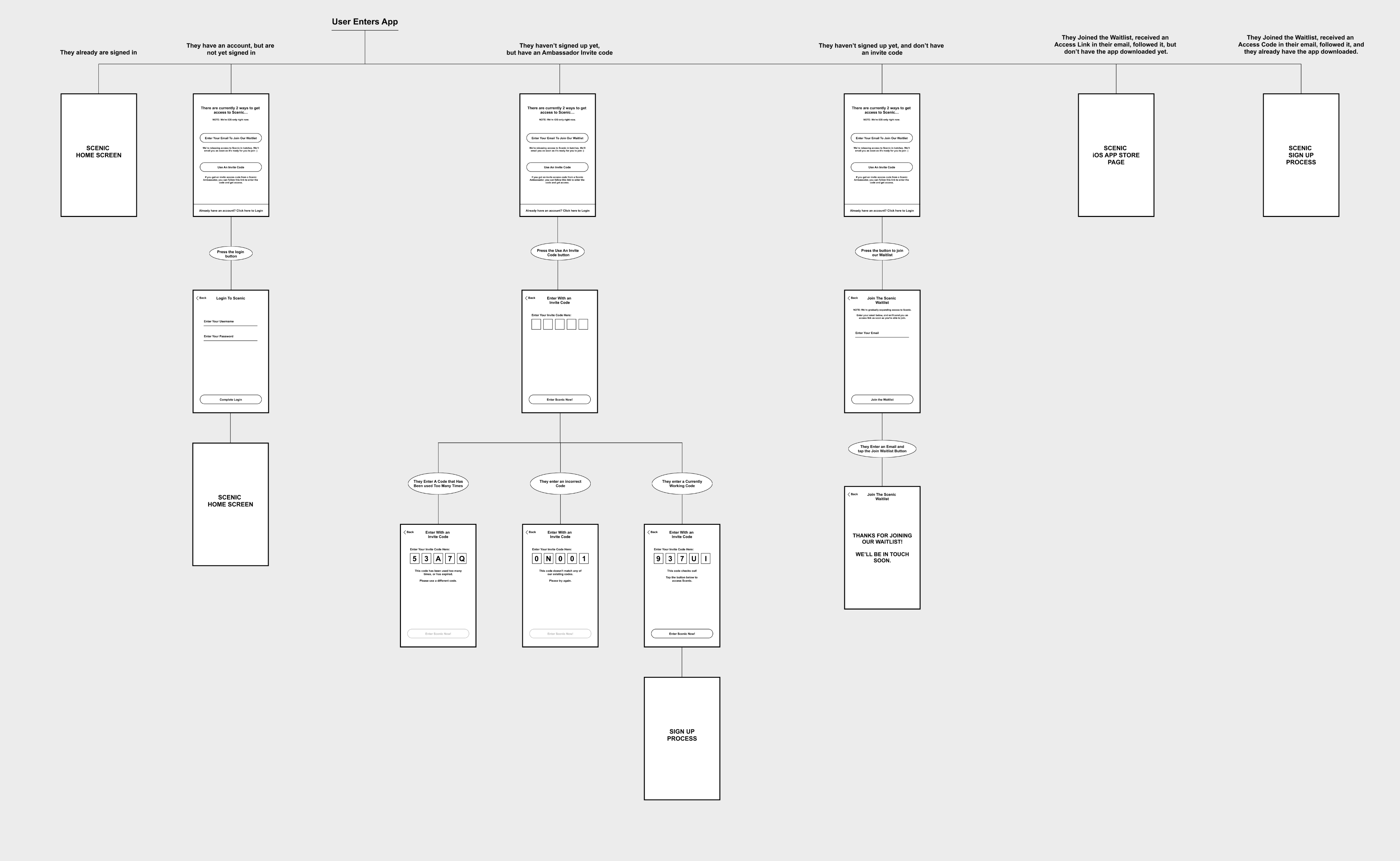
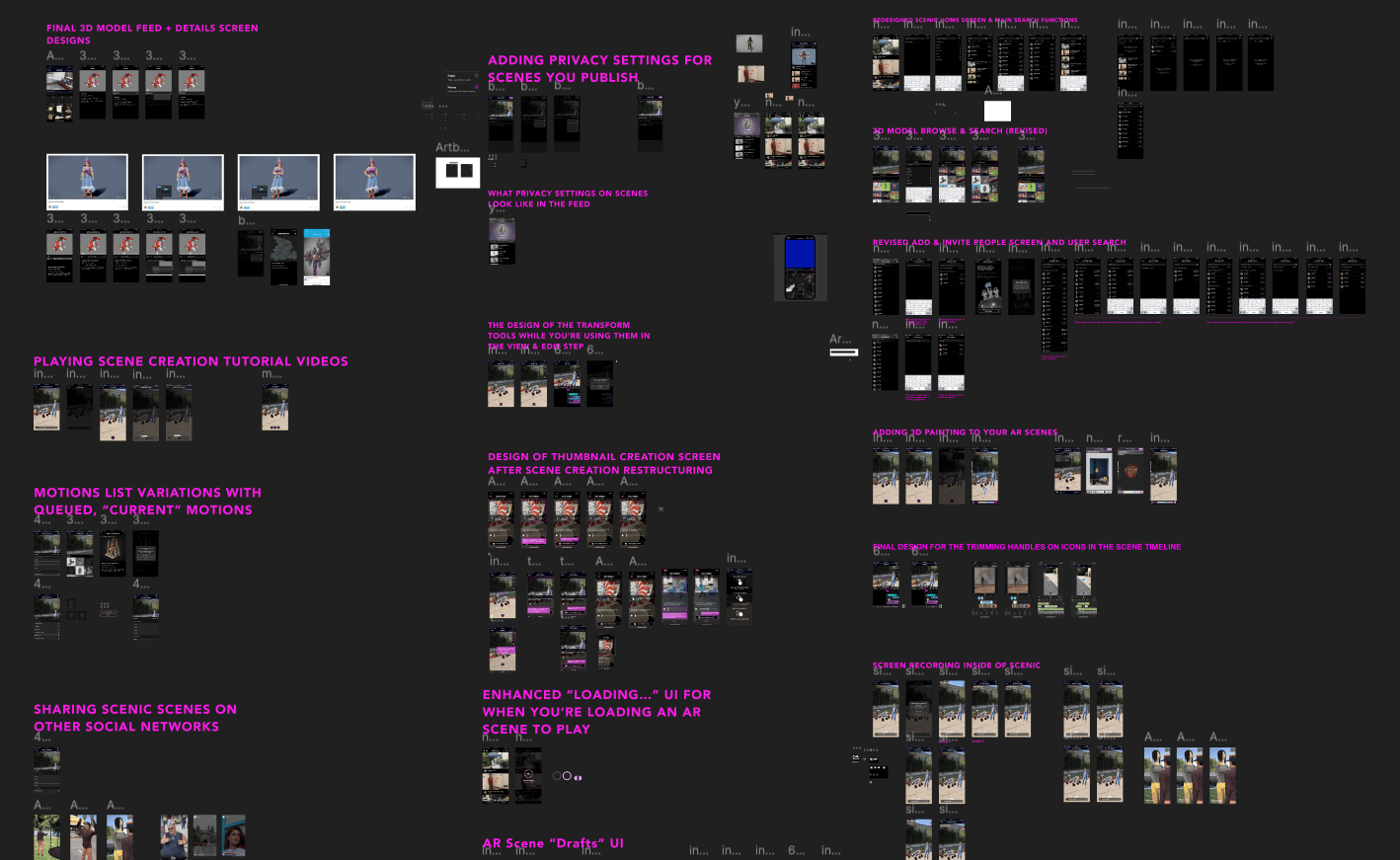
To make Scenic work, it required designs for three connected systems: a social platform for watching and sharing immersive AR scenes, a mobile studio for creating them, and a web-based pipeline for managing 3D assets used in scenes.
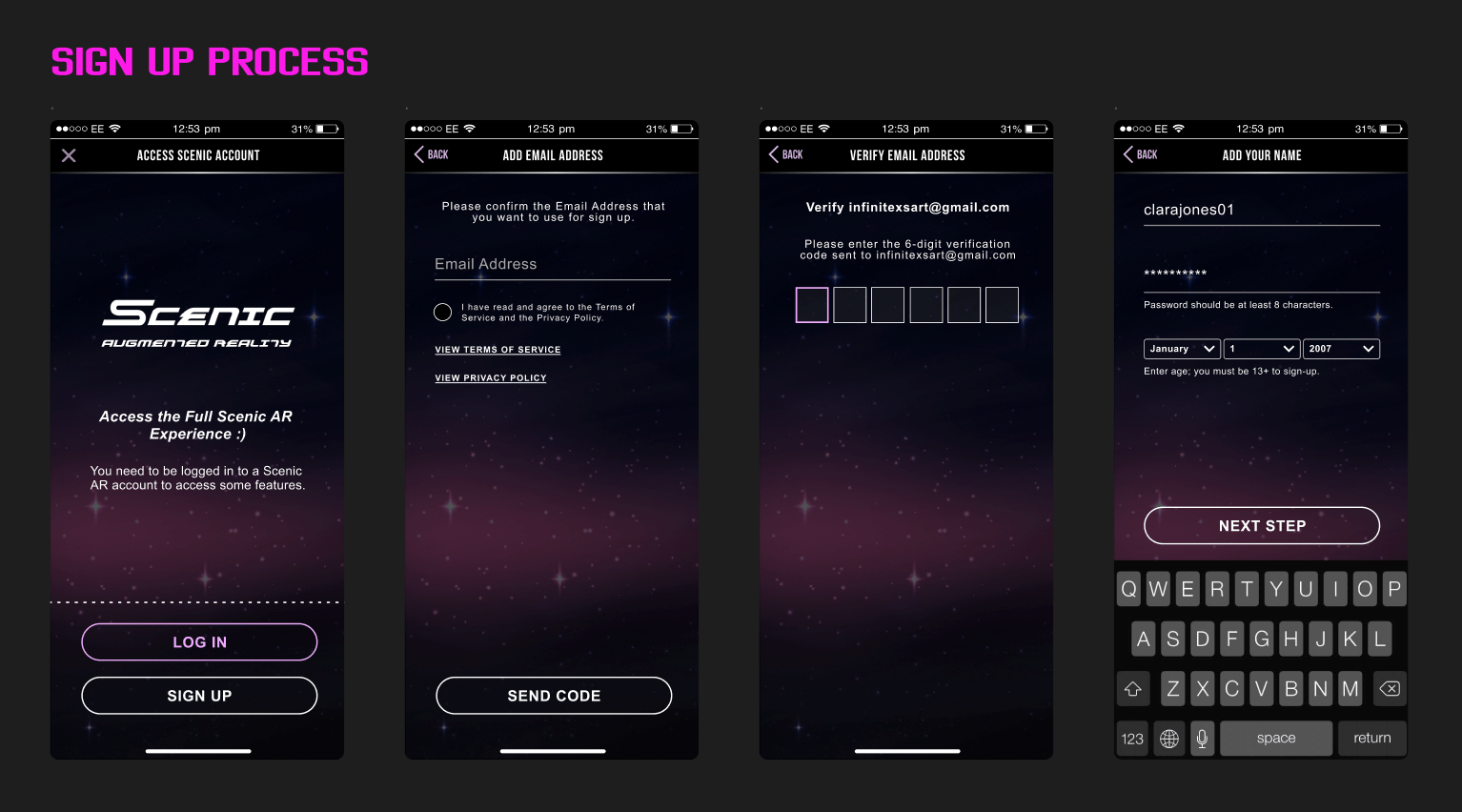
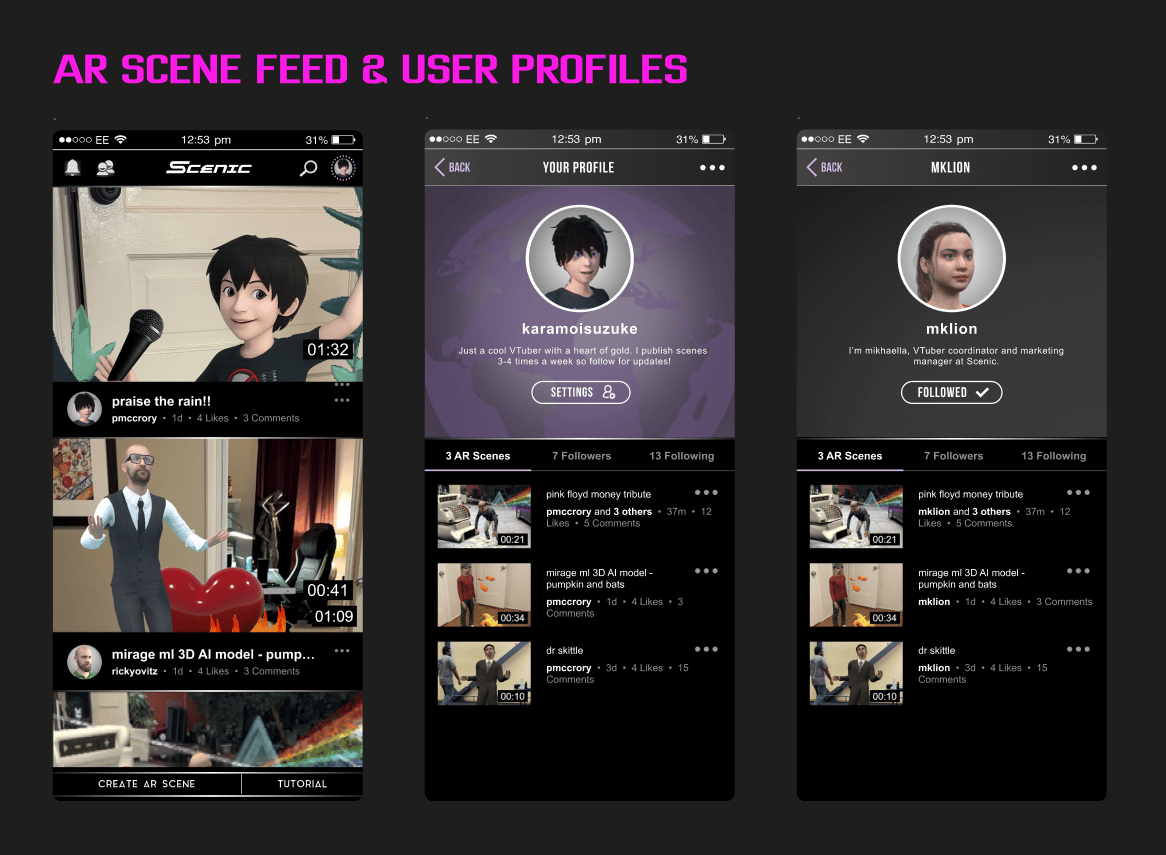
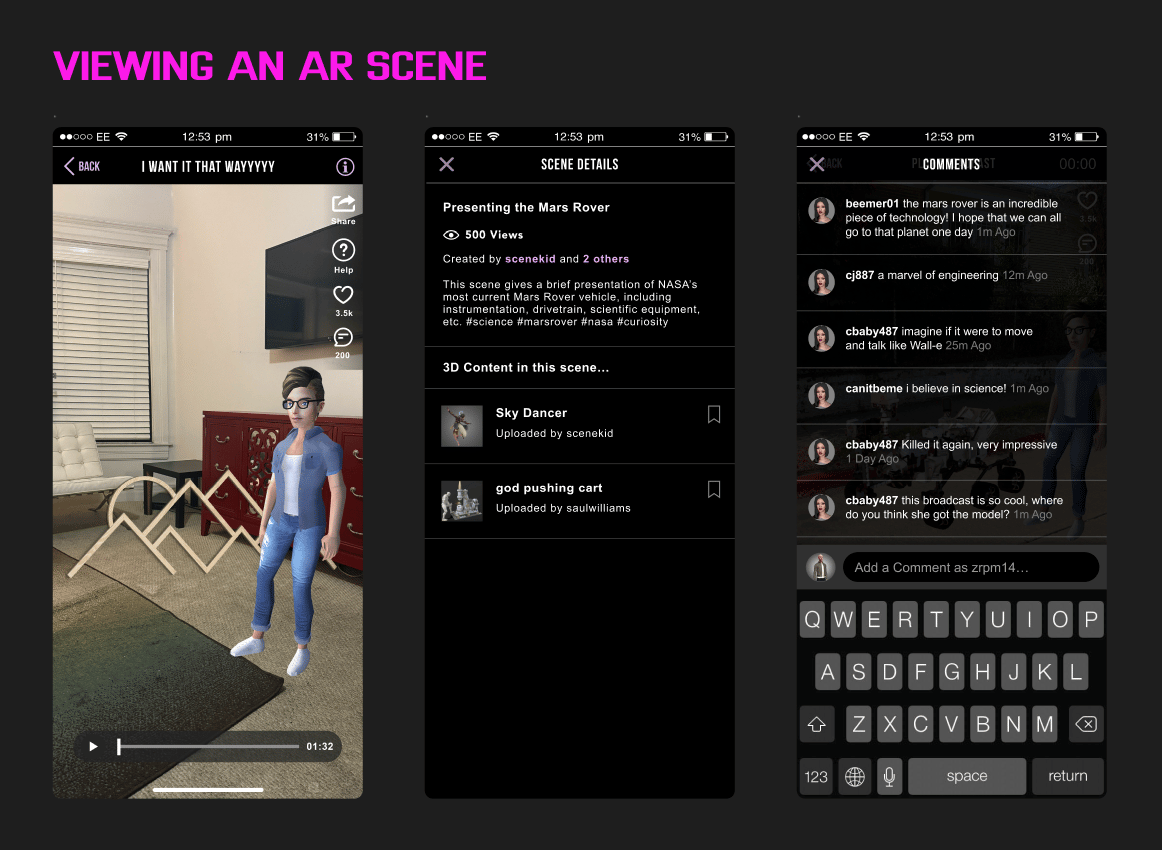
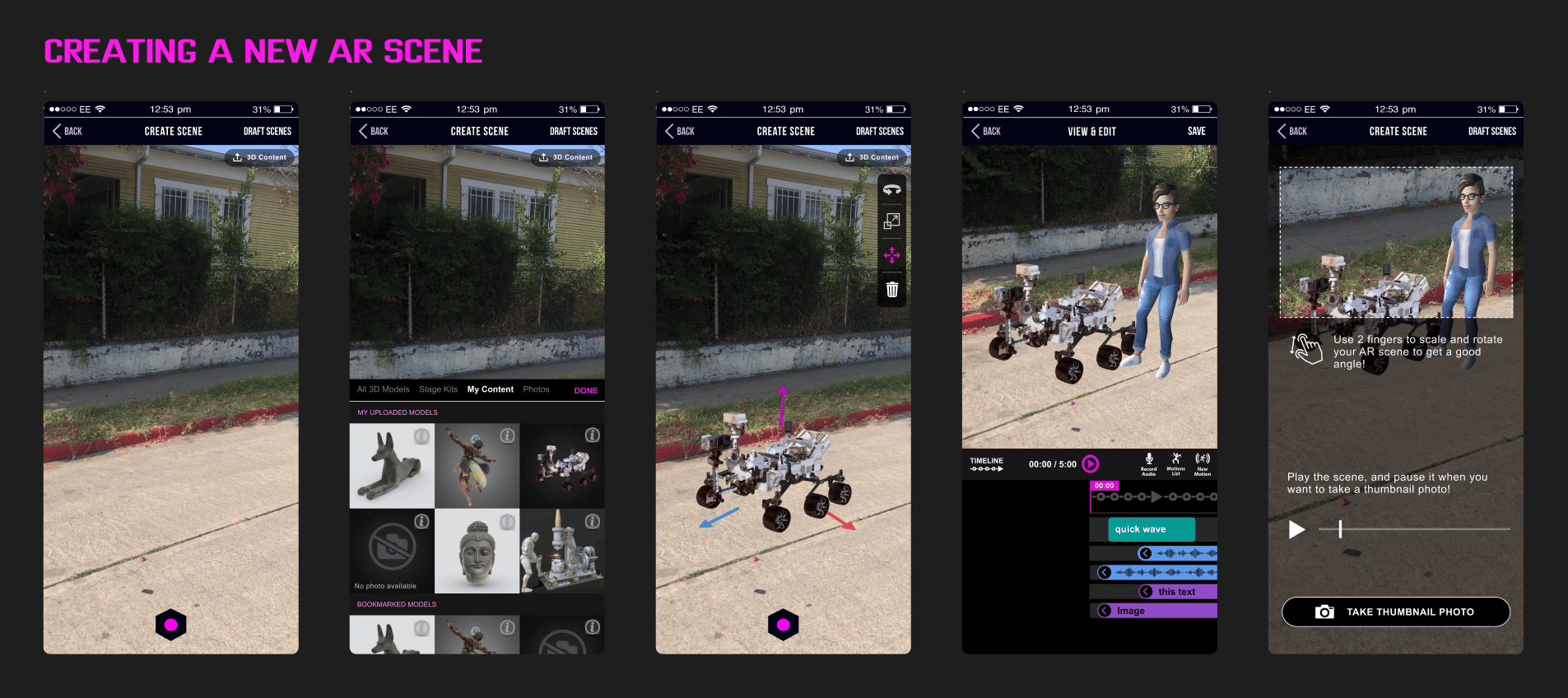
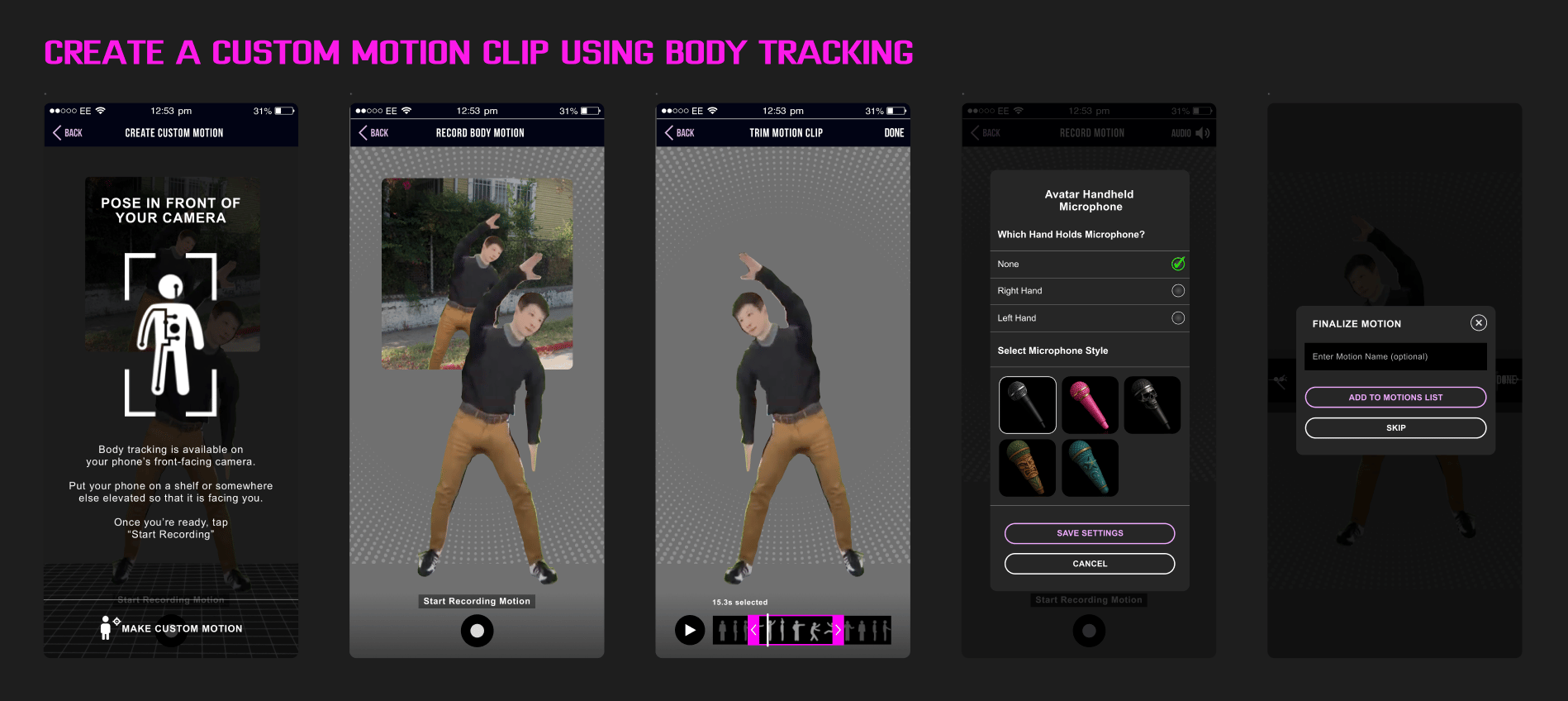
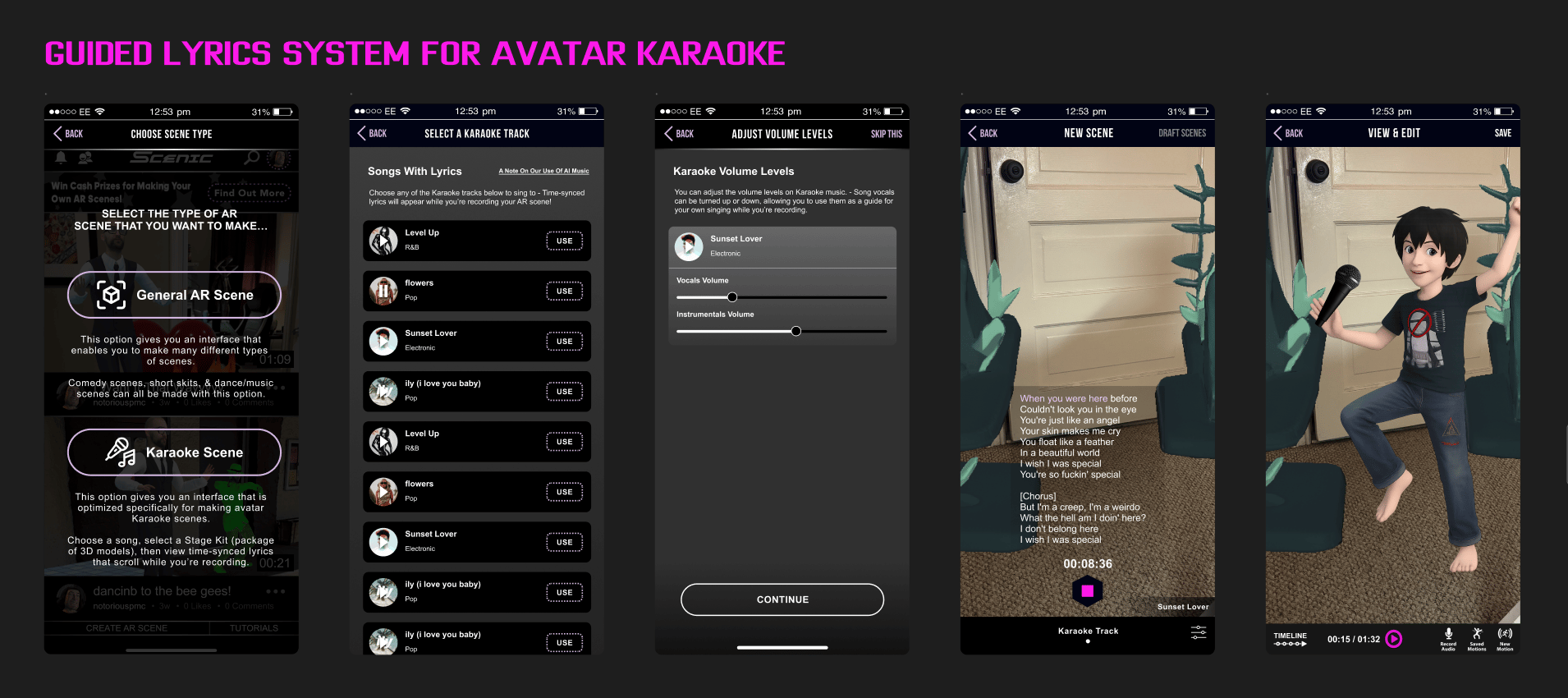
On mobile, the product balances familiar social network features with advanced creator tools. Users can browse and engage with published AR scenes, while also recording body-tracked performances, triggering animations, managing props, and publishing replayable content. The interface needed to feel simple despite the technical complexity operating beneath it.
A separate desktop WebGL interface supports avatar and 3D asset uploads, prioritizing validation, preview, and performance guardrails. The core design challenge was ensuring these surfaces felt cohesive while serving very different user needs within one unified ecosystem.
3D Uploader Interface
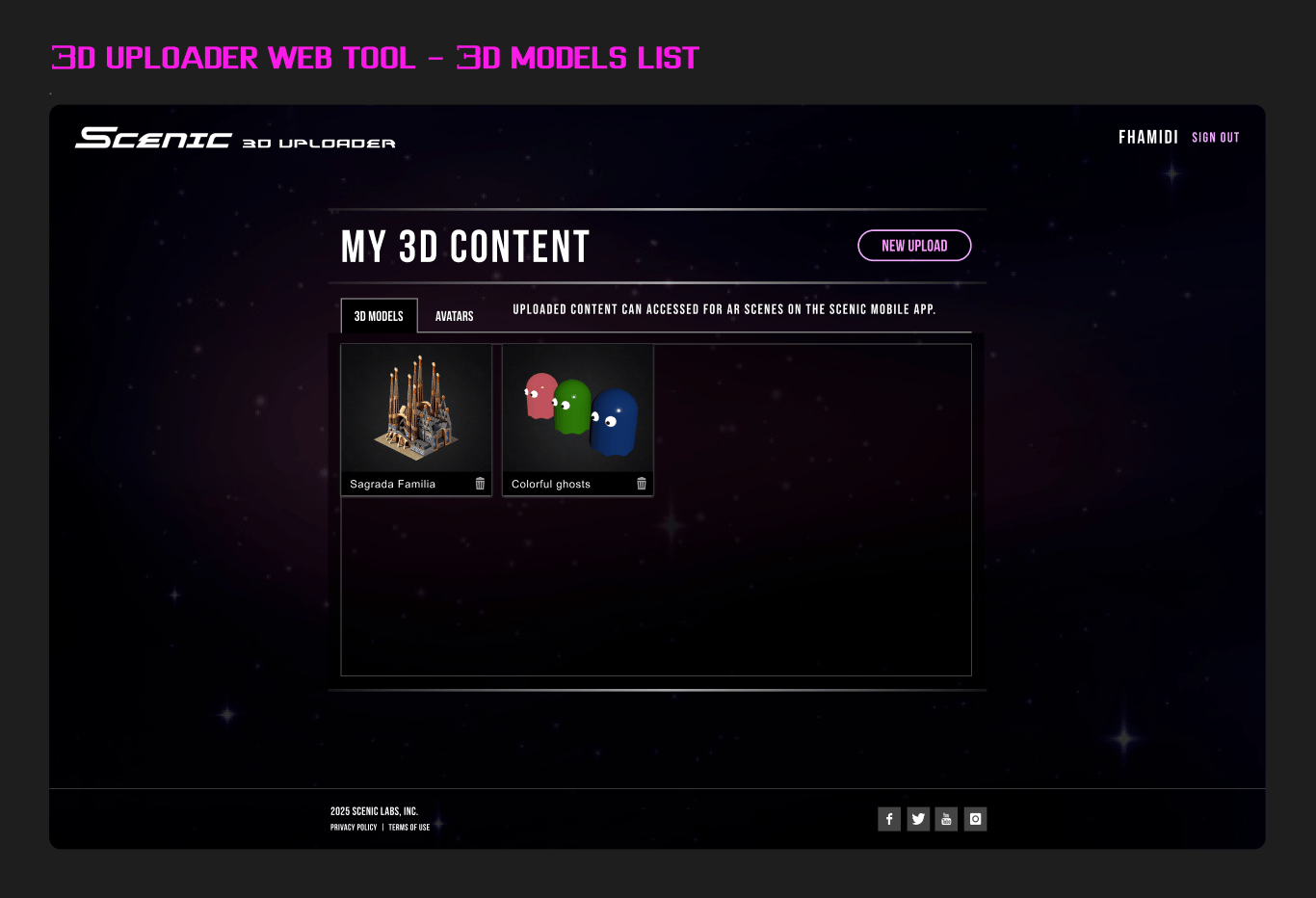
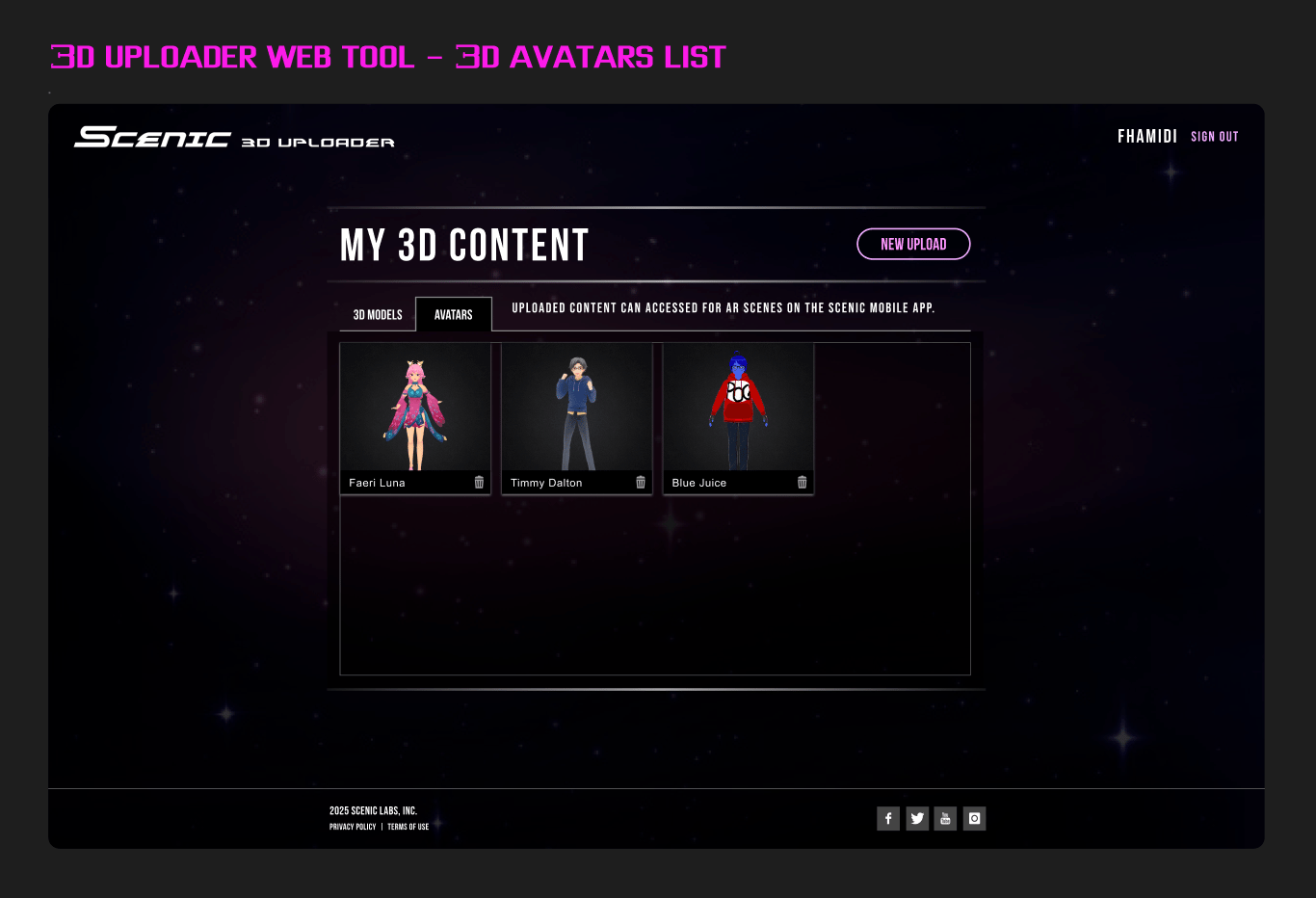
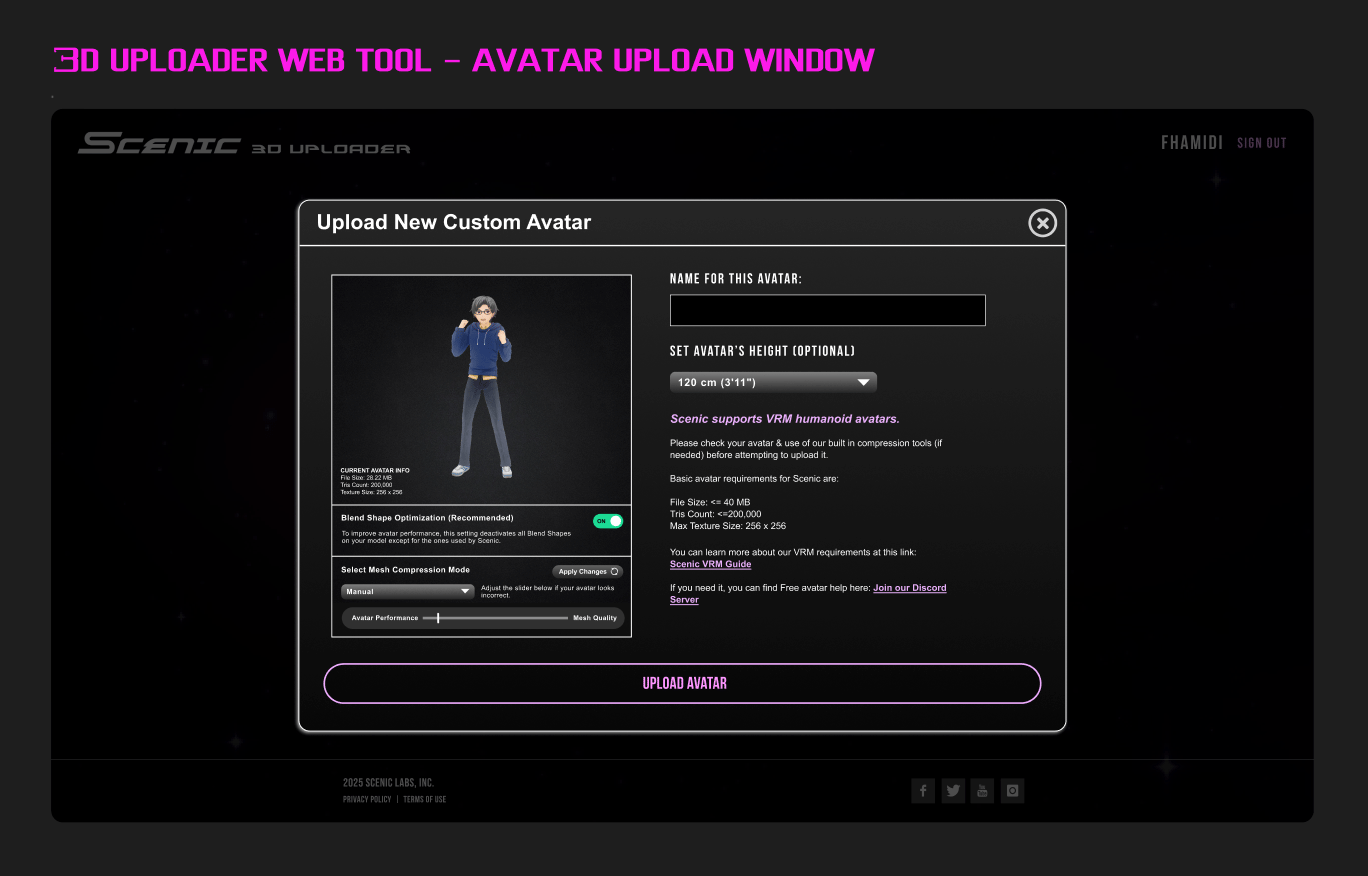
One of the more complex components of Scenic is our avatar upload pipeline. Users bring highly variable VRM and GLB avatar models, often created for desktop streaming environments with little consideration for mobile performance.
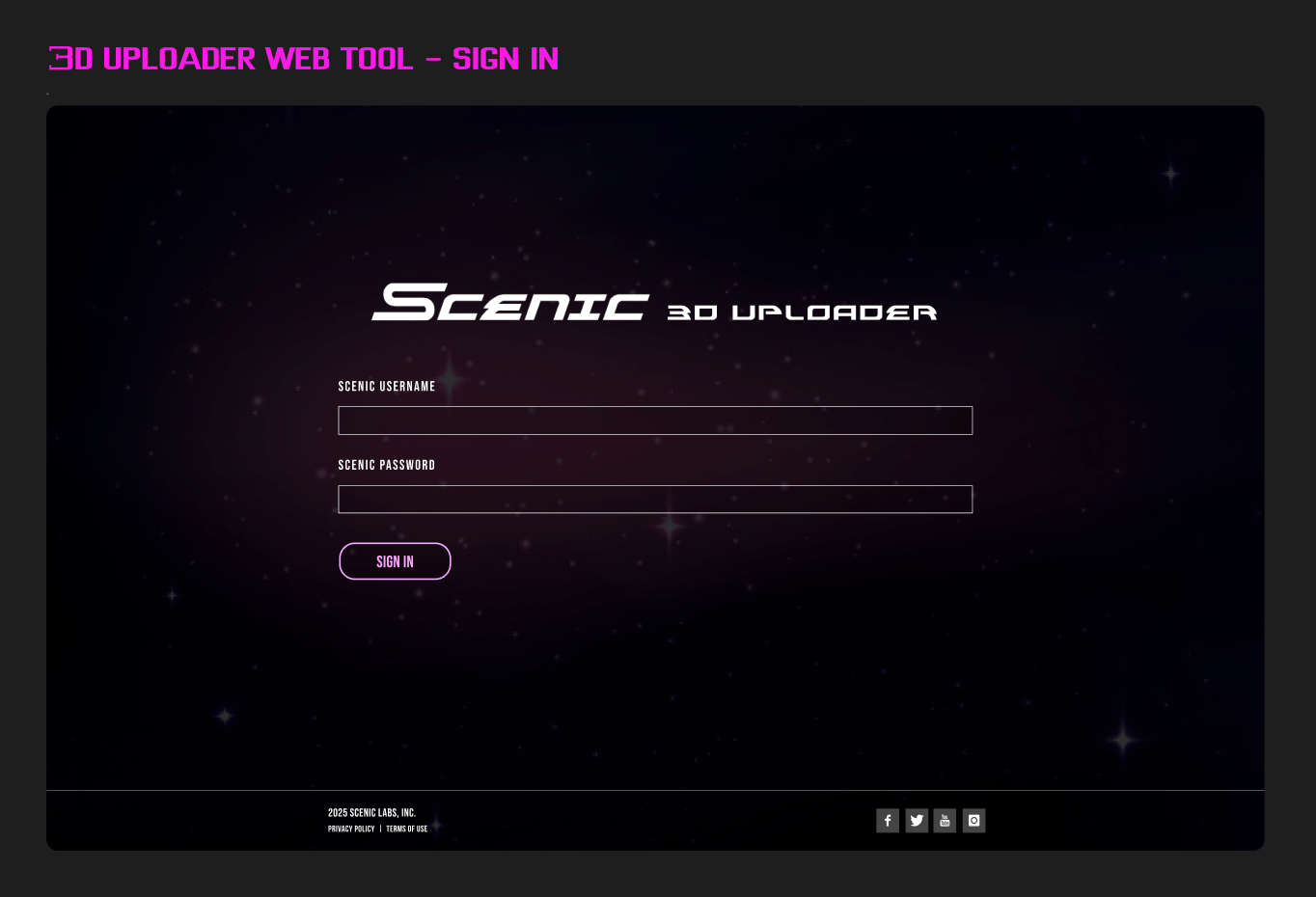
I needed to design a 3D content Uploader tool that required balancing accessibility with protection. The system needed to validate models, preview them reliably, and prevent performance-breaking assets from entering the ecosystem, all without overwhelming creators with technical metrics.
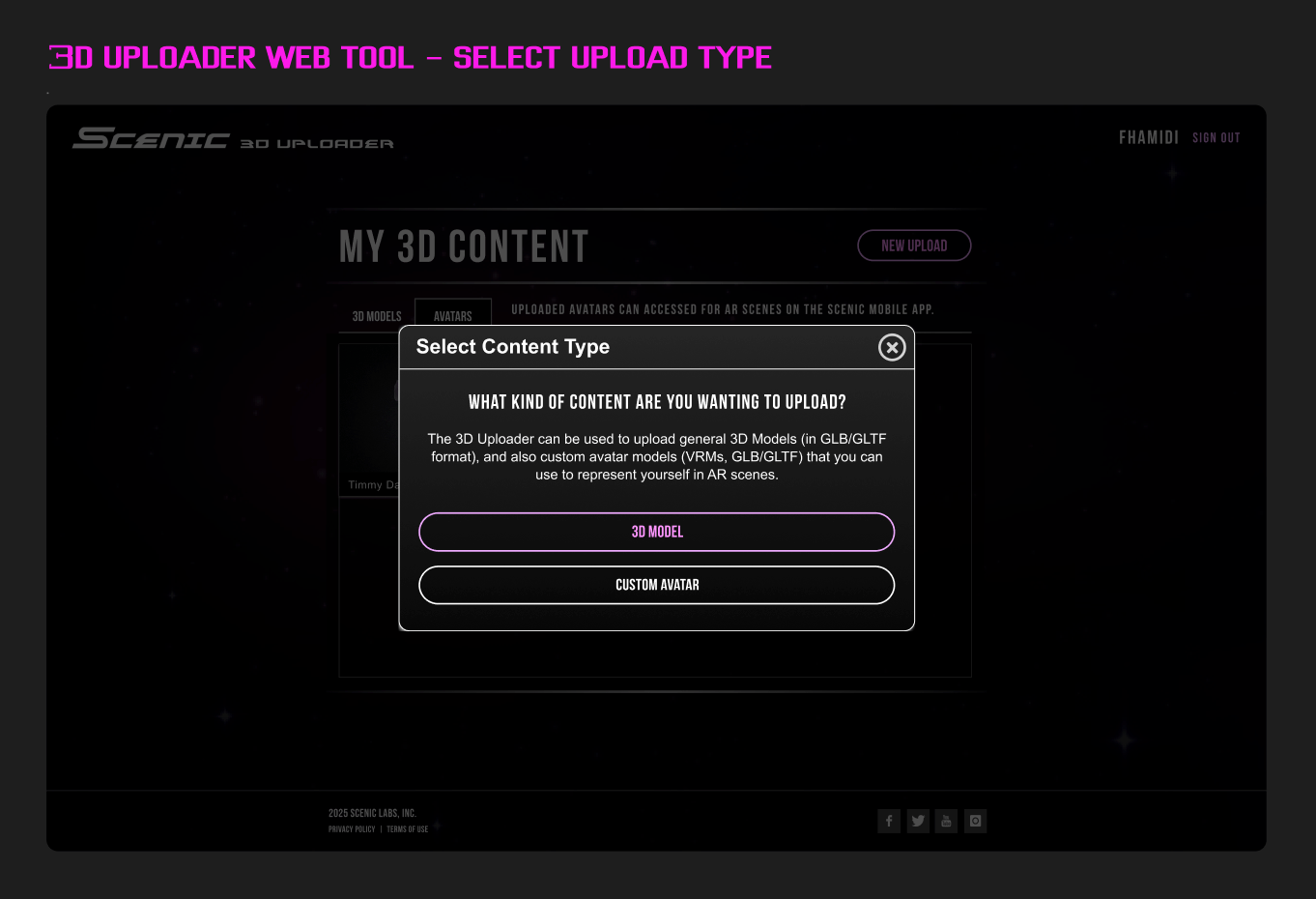
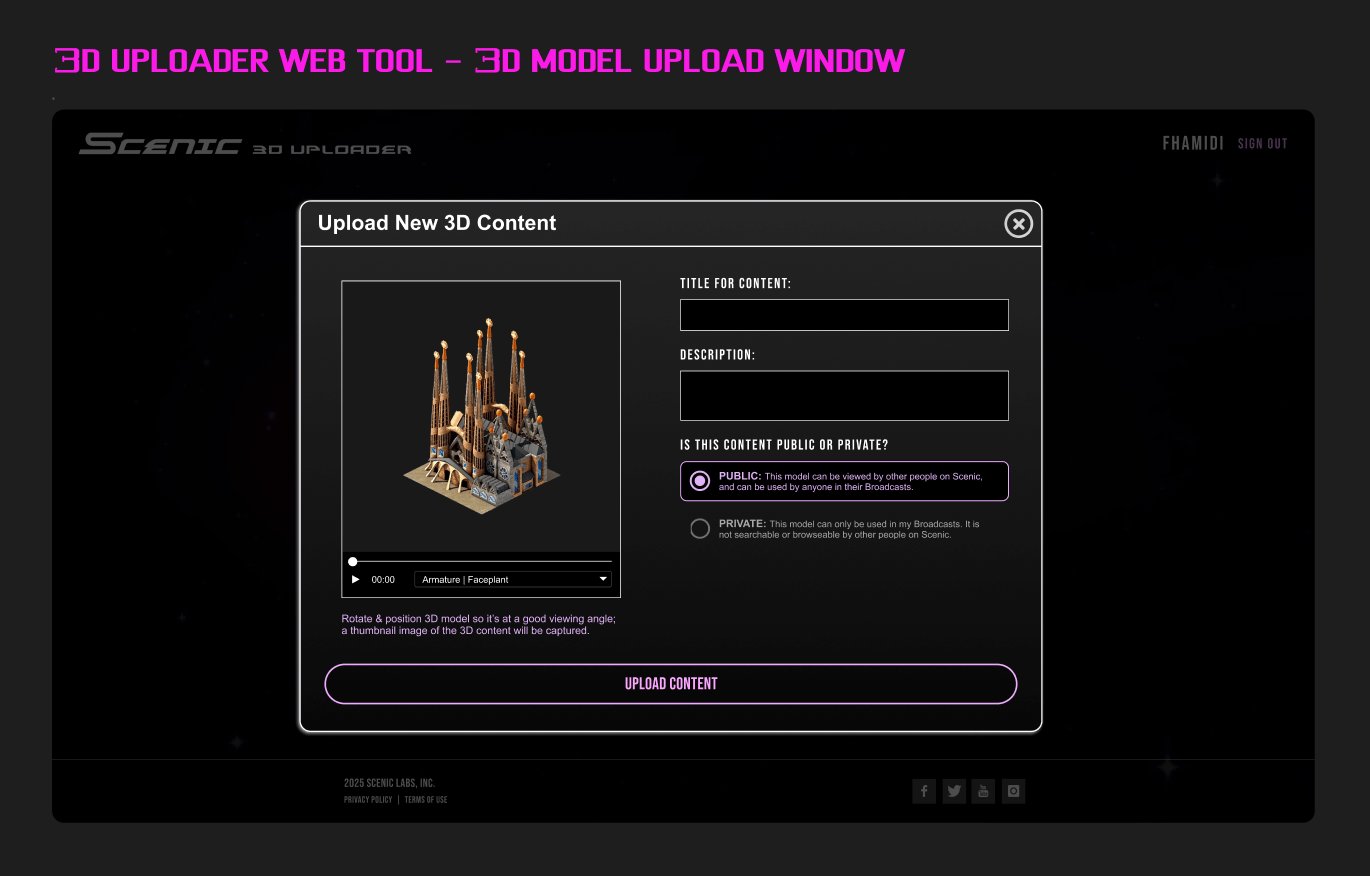
Working closely with engineering I helped define a WebGL-based uploader that allowed in-browser 3D avatar preview, simplified validation feedback, and several options for model optimization. Rather than presenting users with dense model stats, we focused on clarity and guardrails to reduce friction while protecting runtime stability of the app, since it would need to be stable with whatever avatars that we allowed to be uploaded. - Getting this right required significant back and forth testing with both VTubers and our engineers.
The 3D Uploader tool can also be used to upload more general 3D models to your account, which can be used as props and animations in your scenes.
Engineering & Internal Testing
Scenic’s development required close coordination between the design and engineering across mobile AR, 3D rendering, and even the backend infrastructure.
Much of the work centered around us doing iterative internal testing.
Body tracking behavior, animation playback, asset loading, and scene recording were evaluated each step of the way across different devices to identify various issues, instability and performance bottlenecks. When it was necessary, features and issues were evaluated from the standpoint of easing the burden on our development team, and I learned a lot about making those critical decisions.
This phase reinforced the importance of defining clear system boundaries early on. Testing exposed edge cases that directly influenced product decisions (especially inside the Scene Creation process). These ranged from avatar limits to animation controls to scene playback rules.
Working With VTubers (Our Target Market!)
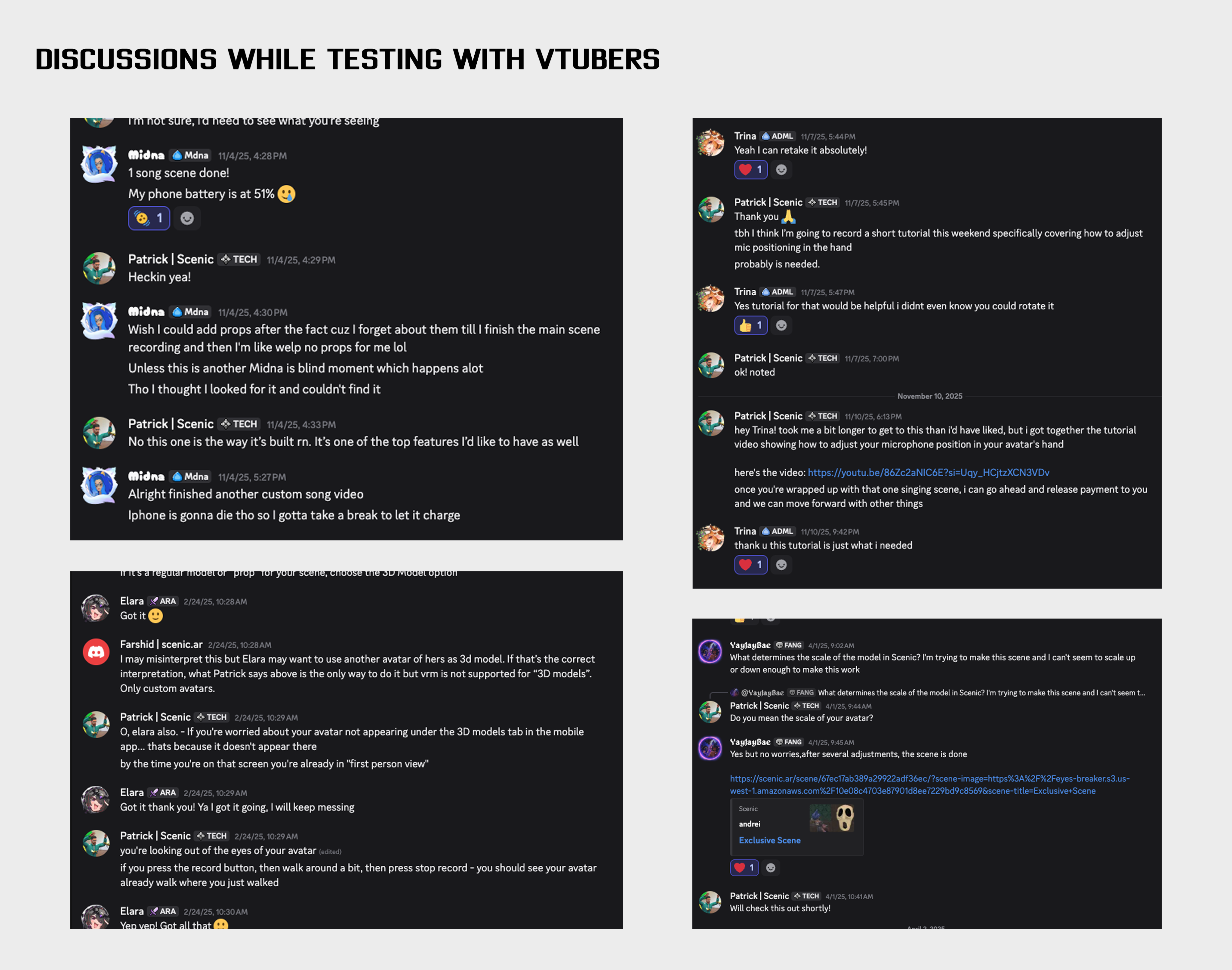
As Scenic took shape, we engaged with various VTuber to see how they actually used the service, and the issues that they had. We wanted to know how they rigged avatars, attempted to trigger animations/create scenes, how they structured performances, and distributed content - communicating with them about these features exposed gaps in our product assumptions that we needed to address.
Some friction was technical, like avatar compatibility and expectations around how the Scene Creation system should work. Other friction was behavioral: creators were already anchored to livestream platforms, and any new tool had to fit naturally into that ecosystem, or create a clever approach for how to get it adopted by the community as their “next new thing”.
Based on this feedback, we shifted Scenic’s positioning. Instead of framing it as an alternative to streaming, we began shaping it as a mobile-first extension of a creator’s presence; a way to publish immersive, replayable performances without the overhead of going live.
These discussions influenced how we approached user onboarding, asset handling, and the overall direction of the platform.
Scenic App Launch + Promotion
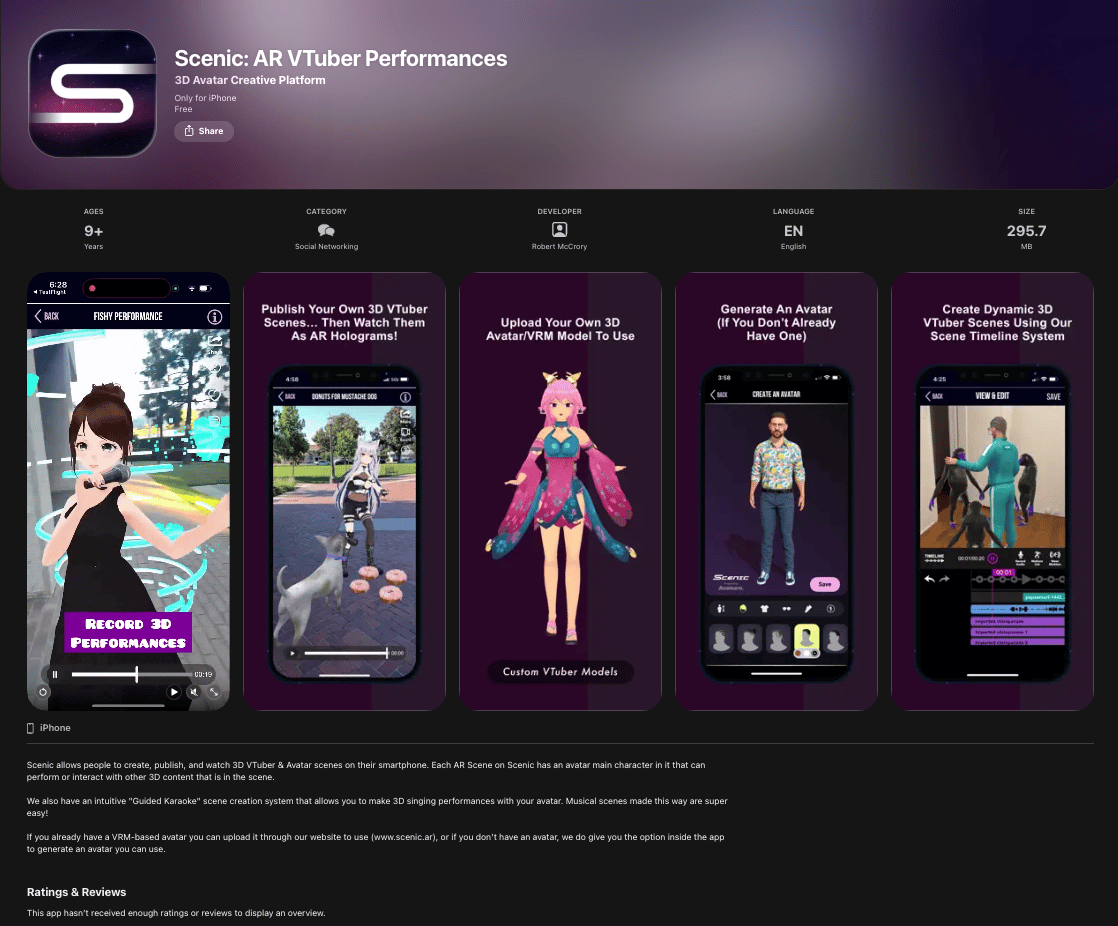
After a long period of development, testing, more development, more testing & refinement... we were able to launch Scenic AR on the iOS app store! As of this writing, we also have a prototype version of the app available for Android.
Post-launch, we have begun focusing on how to reliably onboard new users. Our current strategy is focused around networking with larger VTuber influencer partners who have large audiences on their already existing traditional social media accounts. Once we have connected with a VTuber, we will create a paid partnership with them to have them create 3D, AR scenes that are watchable exclusively on Scenic.
Once a VTuber has created this exclusive AR scene content on Scenic using their character, we will be promoting the fact that these AR scenes exist to their existing audiences across Instagram, X, Tiktok, etc to drive their fans to the app. That’s the strategy we’re currently experimenting with!
Outcomes
- A completed version of Scenic launched on the iOS App Store.
- Built and deployed a Unity/WebGL-based 3D asset management interface.
- We secured angel investment for the project.
- Worked with VTuber influencers for user feedback & iterating the product.
Key Learnings
- Having a stable 3D upload and validation pipeline was foundational to Scenic being reliable and adaptable for creators.
- Constraints in mobile AR performance required we have disciplined scope and deliberate system boundaries.
- Creator activation and distribution proved as critical as the creation tools themselves. You should be willing to put in a significant amount of work to create a movement around your product.
Scenic Augmented Reality
A social networking platform that allows VTubers & avatar creators to make short 3D augmented reality scenes using their virtual character. Avatar scenes published on the service can be replayed and watched in AR as unique form of 3D media, similar to personalized hologram recordings.
Role: UI/UX Design, Project Manager
Year: 2021-Present
Collaborators: Philip Hahs, Farshid Hamidi, Luis Noriega,
Mikhaella Ponce de Leon
My Role & The Team Structure
I was responsible for setting the long-term product vision and defining the scope of the project as co-founder and UX lead, I shaped the experience of the app end-to-end, from avatar uploads, to AR scene recording, to publishing and playback. During the technical development stage of the app, I worked closely with a small distributed engineering team to bring the service to life.
Because Scenic evolved over several years, the role required both product management and design leadership. I prioritized features, managed tradeoffs between performance and flexibility, wrote product specs, designed key interfaces, and worked closely with Unity and backend engineers to ensure the service’s feasibility across different devices. Design and development were tightly interwoven throughout this process.
Early Experimentation
Scenic did not begin as a platform for 3D recordings. Our initial design was for a service that allowed multiple people to use an avatar to make a spatial “3D Call” to each other, allowing you to pop up in someone else’s real world space as a virtual character, and interact in real-time with them.I made a number of UI sketches & full designs for this direction for the product, a few of which are shown below. We also did a significant prototype build out and had a semi-working version of this service.Unfortunately the “real-time” nature fo this concept introduced a number of user experience issues that proved very difficult to resolve, so we moved on to the final form of Scenic, which revolved around allowing avatar creators to make 3D scene recordings in AR.
The Product Vision
Our goal for Scenic became clear: reduce the friction of avatar-based performances while pushing a more immersive type of short-form content.
As VTubing has grown, most workflows still remain tied to desktop streaming setups and live broadcasts, limiting accessibility. At the same time, platforms like VRChat demonstrated the appeal of embodied 3D presence, but those experiences are mostly synchronous, and are “virtual worlds” making it not so quick to get in and out of.
Scenic explored a hybrid model: a platform for immersive 3D performances created on mobile and distributed asynchronously. By allowing users to record spatial avatar performances in AR and publish them as replayable scenes, the platform combined the accessibility of short-form video with the presence of embodied 3D worlds.
The idea of “hologram recordings” has existed in science fiction for a long time; the video below shows a few examples that capture the type of experience we want to make real in the near future, starting with 3D VTubers.
Creating The Scenic UI
To make Scenic work, it required designs for three connected systems: a social platform for watching and sharing immersive AR scenes, a mobile studio for creating them, and a web-based pipeline for managing 3D assets used in scenes.
On mobile, the product balances familiar social network features with advanced creator tools. Users can browse and engage with published AR scenes, while also recording body-tracked performances, triggering animations, managing props, and publishing replayable content. The interface needed to feel simple despite the technical complexity operating beneath it.
A separate desktop WebGL interface supports avatar and 3D asset uploads, prioritizing validation, preview, and performance guardrails. The core design challenge was ensuring these surfaces felt cohesive while serving very different user needs within one unified ecosystem.
3D Uploader Interface
One of the more complex components of Scenic is our avatar upload pipeline. Users bring highly variable VRM and GLB avatar models, often created for desktop streaming environments with little consideration for mobile performance.
I needed to design a 3D content Uploader tool that required balancing accessibility with protection. The system needed to validate models, preview them reliably, and prevent performance-breaking assets from entering the ecosystem, all without overwhelming creators with technical metrics.
Working closely with engineering I helped define a WebGL-based uploader that allowed in-browser 3D avatar preview, simplified validation feedback, and several options for model optimization. Rather than presenting users with dense model stats, we focused on clarity and guardrails to reduce friction while protecting runtime stability of the app, since it would need to be stable with whatever avatars that we allowed to be uploaded. - Getting this right required significant back and forth testing with both VTubers and our engineers.
The 3D Uploader tool can also be used to upload more general 3D models to your account, which can be used as props and animations in your scenes.
Engineering & Internal Testing
Scenic’s development required close coordination between the design and engineering across mobile AR, 3D rendering, and even the backend infrastructure.
Much of the work centered around us doing iterative internal testing.
Body tracking behavior, animation playback, asset loading, and scene recording were evaluated each step of the way across different devices to identify various issues, instability and performance bottlenecks. When it was necessary, features and issues were evaluated from the standpoint of easing the burden on our development team, and I learned a lot about making those critical decisions.
This phase reinforced the importance of defining clear system boundaries early on. Testing exposed edge cases that directly influenced product decisions (especially inside the Scene Creation process). These ranged from avatar limits to animation controls to scene playback rules.
Working With VTubers (Our Target Market!)
As Scenic took shape, we engaged with various VTuber to see how they actually used the service, and the issues that they had. We wanted to know how they rigged avatars, attempted to trigger animations/create scenes, how they structured performances, and distributed content - communicating with them about these features exposed gaps in our product assumptions that we needed to address.
Some friction was technical, like avatar compatibility and expectations around how the Scene Creation system should work. Other friction was behavioral: creators were already anchored to livestream platforms, and any new tool had to fit naturally into that ecosystem, or create a clever approach for how to get it adopted by the community as their “next new thing”.
Based on this feedback, we shifted Scenic’s positioning. Instead of framing it as an alternative to streaming, we began shaping it as a mobile-first extension of a creator’s presence; a way to publish immersive, replayable performances without the overhead of going live.
These discussions influenced how we approached user onboarding, asset handling, and the overall direction of the platform.
Scenic App Launch + Promotion
After a long period of development, testing, more development, more testing & refinement... we were able to launch Scenic AR on the iOS app store! As of this writing, we also have a prototype version of the app available for Android.
Post-launch, we have begun focusing on how to reliably onboard new users. Our current strategy is focused around networking with larger VTuber influencer partners who have large audiences on their already existing traditional social media accounts. Once we have connected with a VTuber, we will create a paid partnership with them to have them create 3D, AR scenes that are watchable exclusively on Scenic.
Once a VTuber has created this exclusive AR scene content on Scenic using their character, we will be promoting the fact that these AR scenes exist to their existing audiences across Instagram, X, Tiktok, etc to drive their fans to the app. That’s the strategy we’re currently experimenting with!
Outcomes
- A completed version of Scenic launched on the iOS App Store.
- Built and deployed a Unity/WebGL-based 3D asset management interface.
- We secured angel investment for the project.
- Worked with VTuber influencers for user feedback & iterating the product.
Key Learnings
- Having a stable 3D upload and validation pipeline was foundational to Scenic being reliable and adaptable for creators.
- Constraints in mobile AR performance required we have disciplined scope and deliberate system boundaries.
- Creator activation and distribution proved as critical as the creation tools themselves. You should be willing to put in a significant amount of work to create a movement around your product.
Scenic Augmented Reality
A social networking platform that allows VTubers & avatar creators to make short 3D augmented reality scenes using their virtual character. Avatar scenes published on the service can be replayed and watched in AR as unique form of 3D media, similar to personalized hologram recordings.
Role: UI/UX Design, Project Manager
Year: 2021-Present
Collaborators: Philip Hahs, Farshid Hamidi, Luis Noriega, Mikhaella Ponce de Leon
My Role & The Team Structure
I was responsible for setting the long-term product vision and defining the scope of the project as co-founder and UX lead, I shaped the experience of the app end-to-end, from avatar uploads, to AR scene recording, to publishing and playback. During the technical development stage of the app, I worked closely with a small distributed engineering team to bring the service to life.
Because Scenic evolved over several years, the role required both product management and design leadership. I prioritized features, managed tradeoffs between performance and flexibility, wrote product specs, designed key interfaces, and worked closely with Unity and backend engineers to ensure the service’s feasibility across different devices. Design and development were tightly interwoven throughout this process.
Early Experimentation
Scenic did not begin as a platform for 3D recordings. Our initial design was for a service that allowed multiple people to use an avatar to make a spatial “3D Call” to each other, allowing you to pop up in someone else’s real world space as a virtual character, and interact in real-time with them.I made a number of UI sketches & full designs for this direction for the product, a few of which are shown below. We also did a significant prototype build out and had a semi-working version of this service.Unfortunately the “real-time” nature fo this concept introduced a number of user experience issues that proved very difficult to resolve, so we moved on to the final form of Scenic, which revolved around allowing avatar creators to make 3D scene recordings in AR.
The Product Vision
Our goal for Scenic became clear: reduce the friction of avatar-based performances while pushing a more immersive type of short-form content.
As VTubing has grown, most workflows still remain tied to desktop streaming setups and live broadcasts, limiting accessibility. At the same time, platforms like VRChat demonstrated the appeal of embodied 3D presence, but those experiences are mostly synchronous, and are “virtual worlds” making it not so quick to get in and out of.
Scenic explored a hybrid model: a platform for immersive 3D performances created on mobile and distributed asynchronously. By allowing users to record spatial avatar performances in AR and publish them as replayable scenes, the platform combined the accessibility of short-form video with the presence of embodied 3D worlds.
The idea of “hologram recordings” has existed in science fiction for a long time; the video below shows a few examples that capture the type of experience we want to make real in the near future, starting with 3D VTubers.
Creating The Scenic UI
To make Scenic work, it required designs for three connected systems: a social platform for watching and sharing immersive AR scenes, a mobile studio for creating them, and a web-based pipeline for managing 3D assets used in scenes.
On mobile, the product balances familiar social network features with advanced creator tools. Users can browse and engage with published AR scenes, while also recording body-tracked performances, triggering animations, managing props, and publishing replayable content. The interface needed to feel simple despite the technical complexity operating beneath it.
A separate desktop WebGL interface supports avatar and 3D asset uploads, prioritizing validation, preview, and performance guardrails. The core design challenge was ensuring these surfaces felt cohesive while serving very different user needs within one unified ecosystem.
3D Uploader Interface
One of the more complex components of Scenic is our avatar upload pipeline. Users bring highly variable VRM and GLB avatar models, often created for desktop streaming environments with little consideration for mobile performance.
I needed to design a 3D content Uploader tool that required balancing accessibility with protection. The system needed to validate models, preview them reliably, and prevent performance-breaking assets from entering the ecosystem, all without overwhelming creators with technical metrics.
Working closely with engineering I helped define a WebGL-based uploader that allowed in-browser 3D avatar preview, simplified validation feedback, and several options for model optimization. Rather than presenting users with dense model stats, we focused on clarity and guardrails to reduce friction while protecting runtime stability of the app, since it would need to be stable with whatever avatars that we allowed to be uploaded. - Getting this right required significant back and forth testing with both VTubers and our engineers.
The 3D Uploader tool can also be used to upload more general 3D models to your account, which can be used as props and animations in your scenes.
Engineering & Internal Testing
Scenic’s development required close coordination between the design and engineering across mobile AR, 3D rendering, and even the backend infrastructure.
Much of the work centered around us doing iterative internal testing.
Body tracking behavior, animation playback, asset loading, and scene recording were evaluated each step of the way across different devices to identify various issues, instability and performance bottlenecks. When it was necessary, features and issues were evaluated from the standpoint of easing the burden on our development team, and I learned a lot about making those critical decisions.
This phase reinforced the importance of defining clear system boundaries early on. Testing exposed edge cases that directly influenced product decisions (especially inside the Scene Creation process). These ranged from avatar limits to animation controls to scene playback rules.
Working With VTubers (Our Target Market!)
As Scenic took shape, we engaged with various VTuber to see how they actually used the service, and the issues that they had. We wanted to know how they rigged avatars, attempted to trigger animations/create scenes, how they structured performances, and distributed content - communicating with them about these features exposed gaps in our product assumptions that we needed to address.
Some friction was technical, like avatar compatibility and expectations around how the Scene Creation system should work. Other friction was behavioral: creators were already anchored to livestream platforms, and any new tool had to fit naturally into that ecosystem, or create a clever approach for how to get it adopted by the community as their “next new thing”.
Based on this feedback, we shifted Scenic’s positioning. Instead of framing it as an alternative to streaming, we began shaping it as a mobile-first extension of a creator’s presence; a way to publish immersive, replayable performances without the overhead of going live.
These discussions influenced how we approached user onboarding, asset handling, and the overall direction of the platform.
Scenic App Launch + Promotion
After a long period of development, testing, more development, more testing & refinement... we were able to launch Scenic AR on the iOS app store! As of this writing, we also have a prototype version of the app available for Android.
Post-launch, we have begun focusing on how to reliably onboard new users. Our current strategy is focused around networking with larger VTuber influencer partners who have large audiences on their already existing traditional social media accounts. Once we have connected with a VTuber, we will create a paid partnership with them to have them create 3D, AR scenes that are watchable exclusively on Scenic.
Once a VTuber has created this exclusive AR scene content on Scenic using their character, we will be promoting the fact that these AR scenes exist to their existing audiences across Instagram, X, Tiktok, etc to drive their fans to the app. That’s the strategy we’re currently experimenting with!
Outcomes
- A completed version of Scenic launched on the iOS App Store.
- Built and deployed a Unity/WebGL-based 3D asset management interface.
- We secured angel investment for the project.
- Worked with VTuber influencers for user feedback & iterating the product.
Key Learnings
- Having a stable 3D upload and validation pipeline was foundational to Scenic being reliable and adaptable for creators.
- Constraints in mobile AR performance required we have disciplined scope and deliberate system boundaries.
- Creator activation and distribution proved as critical as the creation tools themselves. You should be willing to put in a significant amount of work to create a movement around your product.