
Worldpark
A mobile AR skateboarding game that I led the design and management of. Our goal was to explore how real-world physical activity, user-generated environments, and gameplay systems could work together in augmented reality.
Role: UI/UX Design, Project Manager
Year: 2019-2021
Collaborators: Philip Hahs, Farshid Hamidi, Richard Lapham
Role & Team Structure
I defined the initial product vision and scope for Worldpark while also designing the core UX flows, gameplay systems, and scoring mechanics. I coordinated engineering priorities, set meetings, and made tradeoffs to keep the project focused and feasible within the constraints of AR hardware and a small team.
For development of the app, Philip Hahs & Richard Lapham came onboard to create the front-end gameplay and UI implementation, while Farshid Hamidi worked on back-end systems, database and infrastructure. As a small, execution-constrained team, design and project management decisions were closely intertwined throughout development.
Context & Early Direction
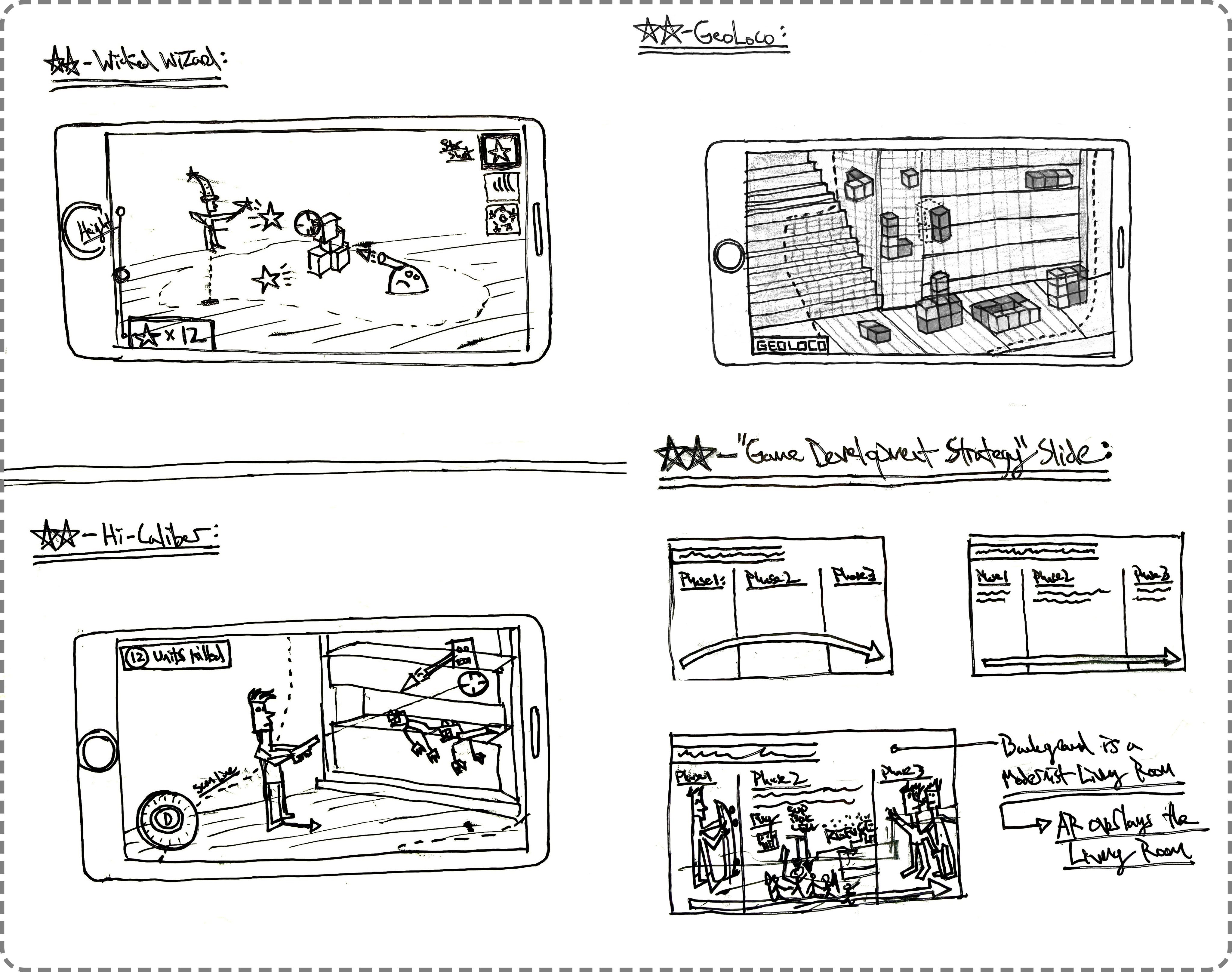
Worldpark did not begin as a skateboarding game. Early exploration focused on a wide range of AR-native game ideas that were documented with wireframes and notes.
Through research and experimentation, skateboarding emerged as a well grounded game mechanic for AR: it naturally combined physical movement, measurable skill, and location-based play.
Worldpark Concept Takes Shape
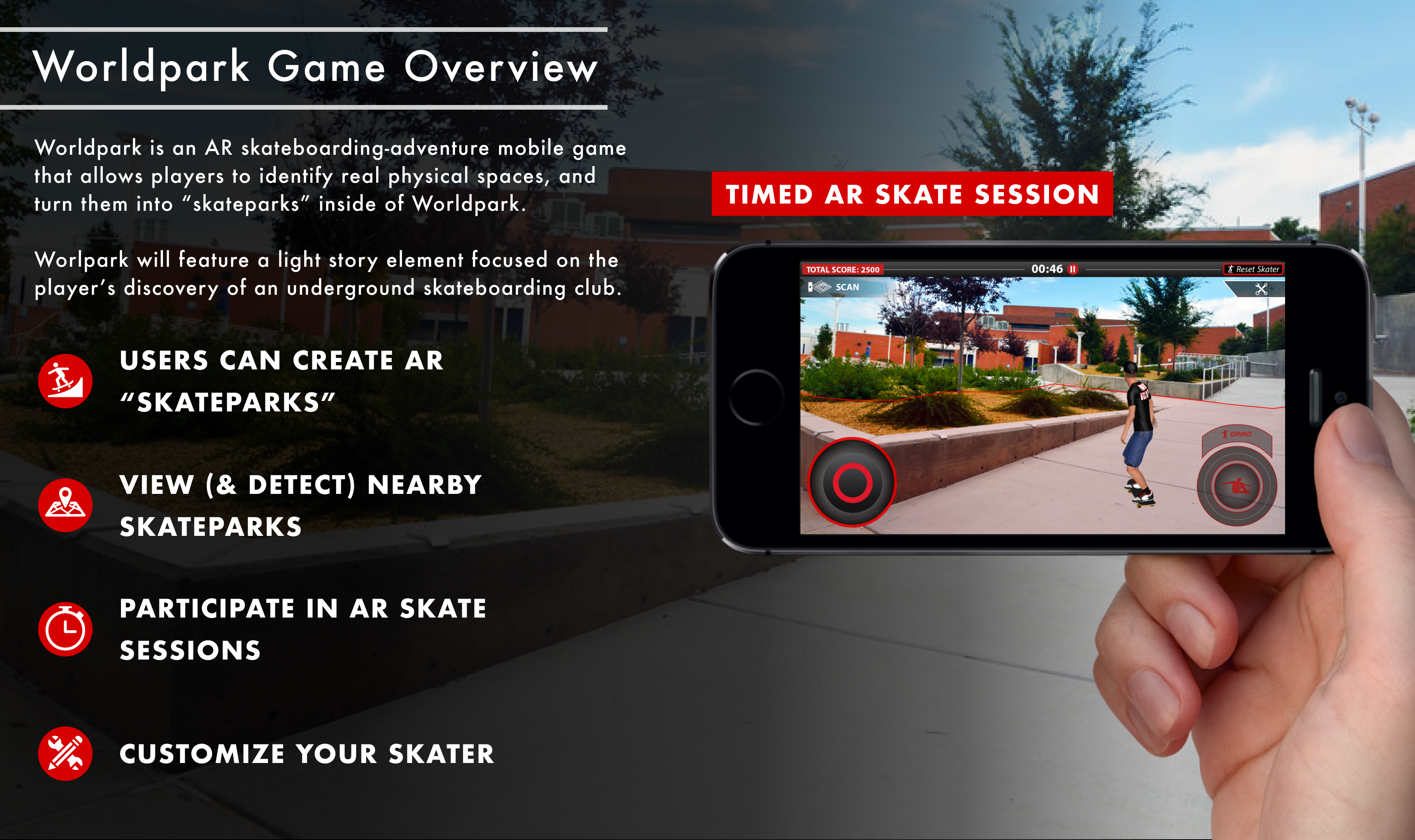
Out of this initial stage of ideating around potential AR game concepts, came the concept for Worldpark. Augmented reality and skateboarding seemed like a perfect match, since if you were to go out and go somewhere to play an AR skateboarding game somewhere, it would closely match the experience of a real skateboarder going out to find the perfect skate spot.
This seemed like a good direction, so I proceeded to come up with a game document describing the features it should have.
Creating The Worldpark Interface
Now that Worldpark had solidified into a defined product, it was time to move into the design phase.
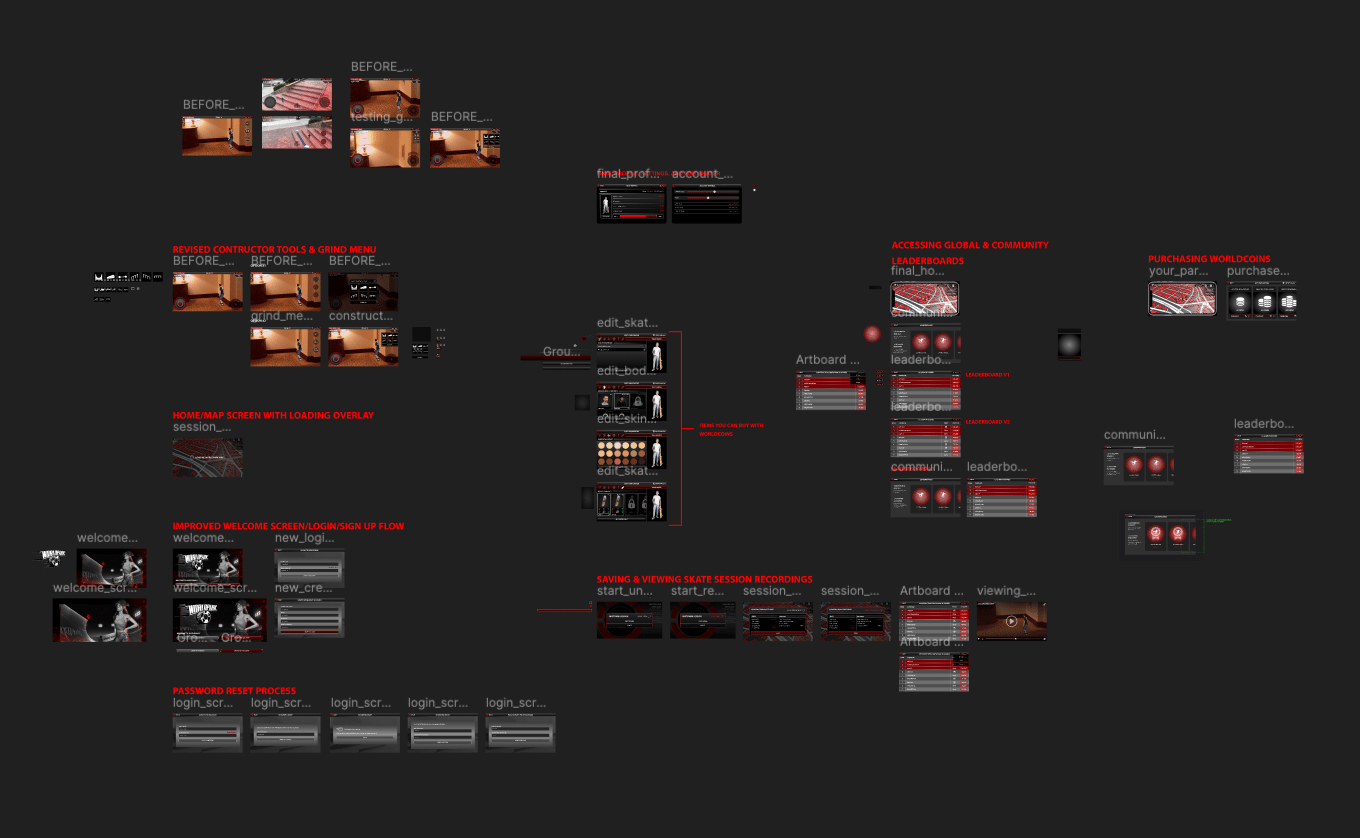
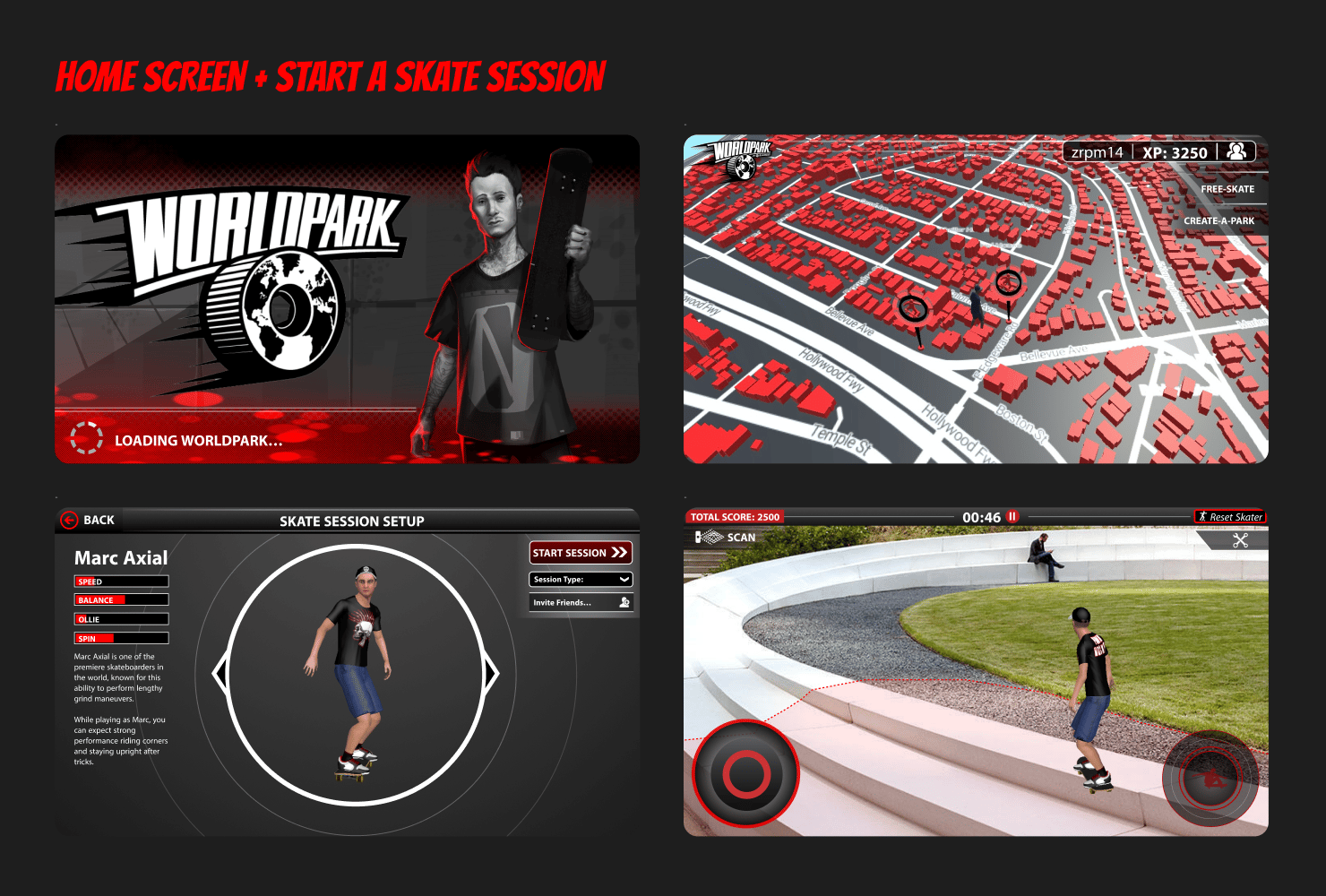
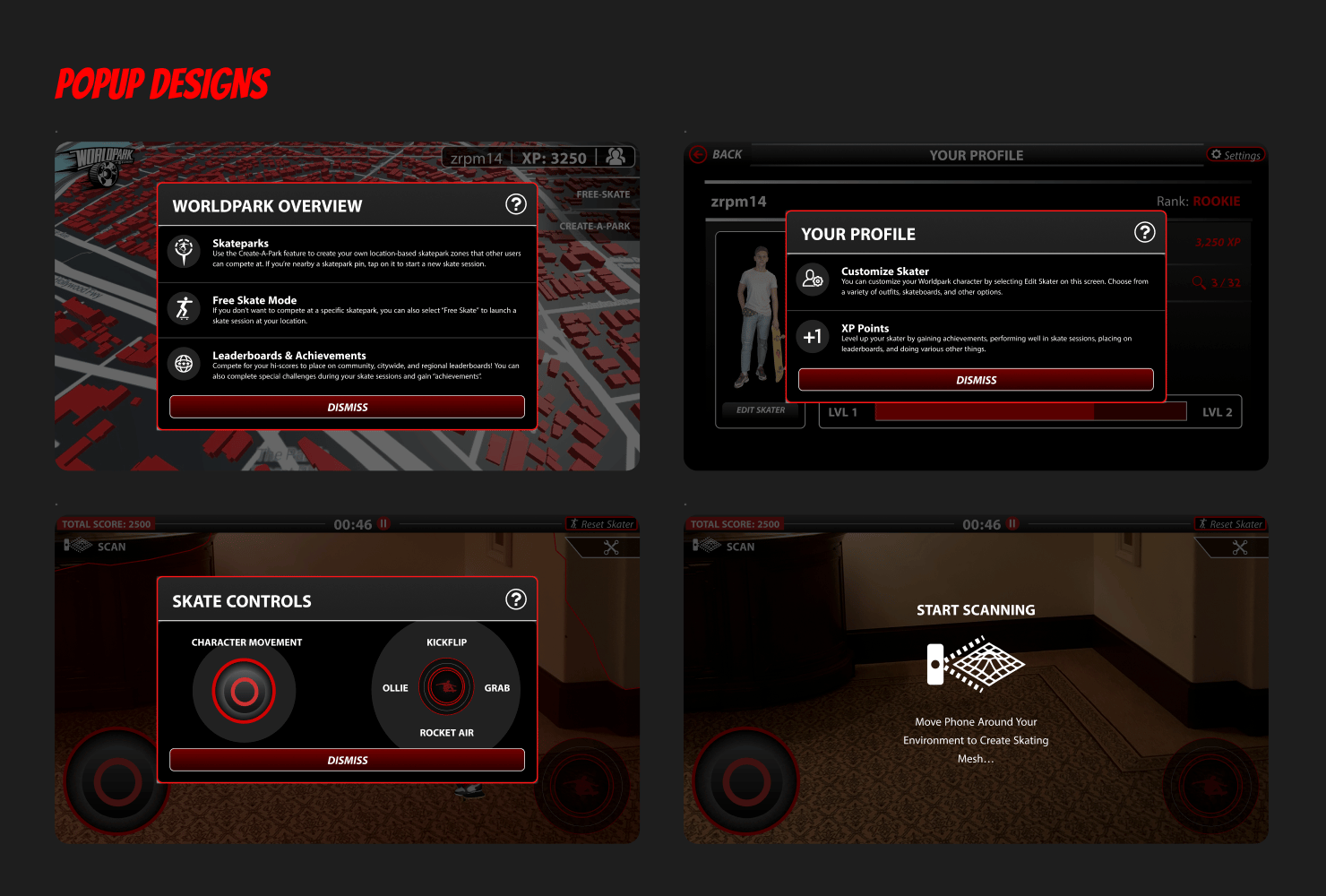
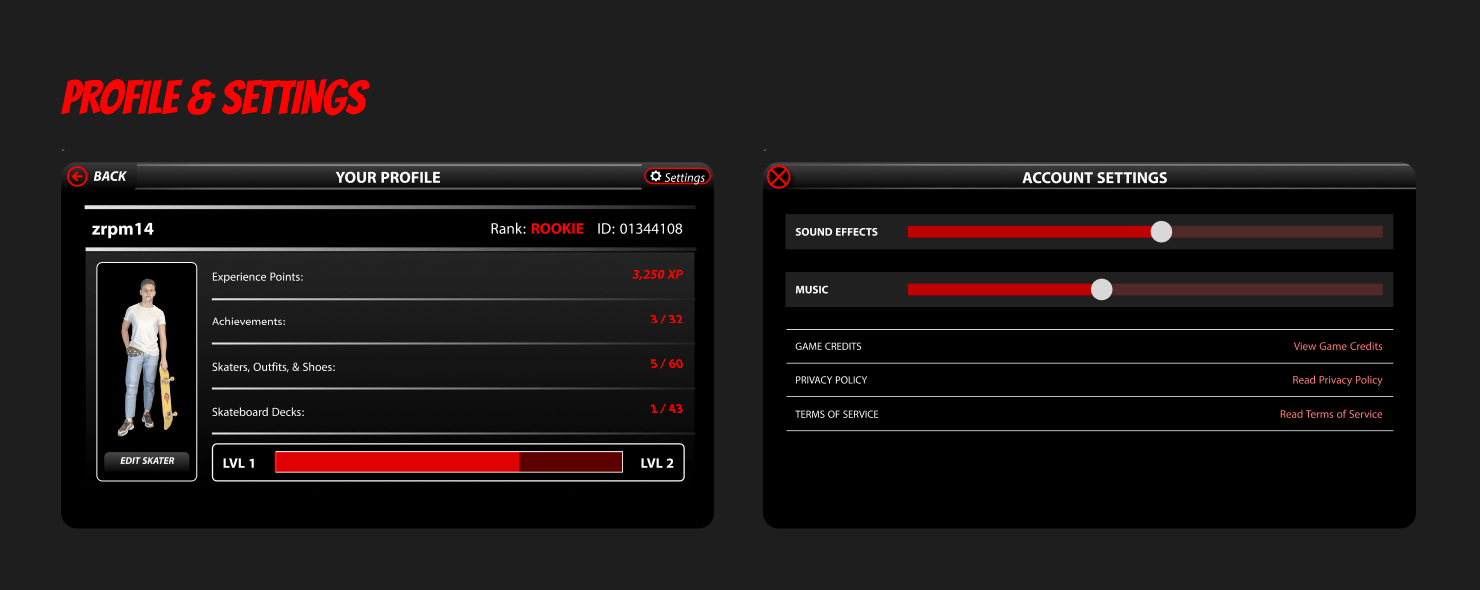
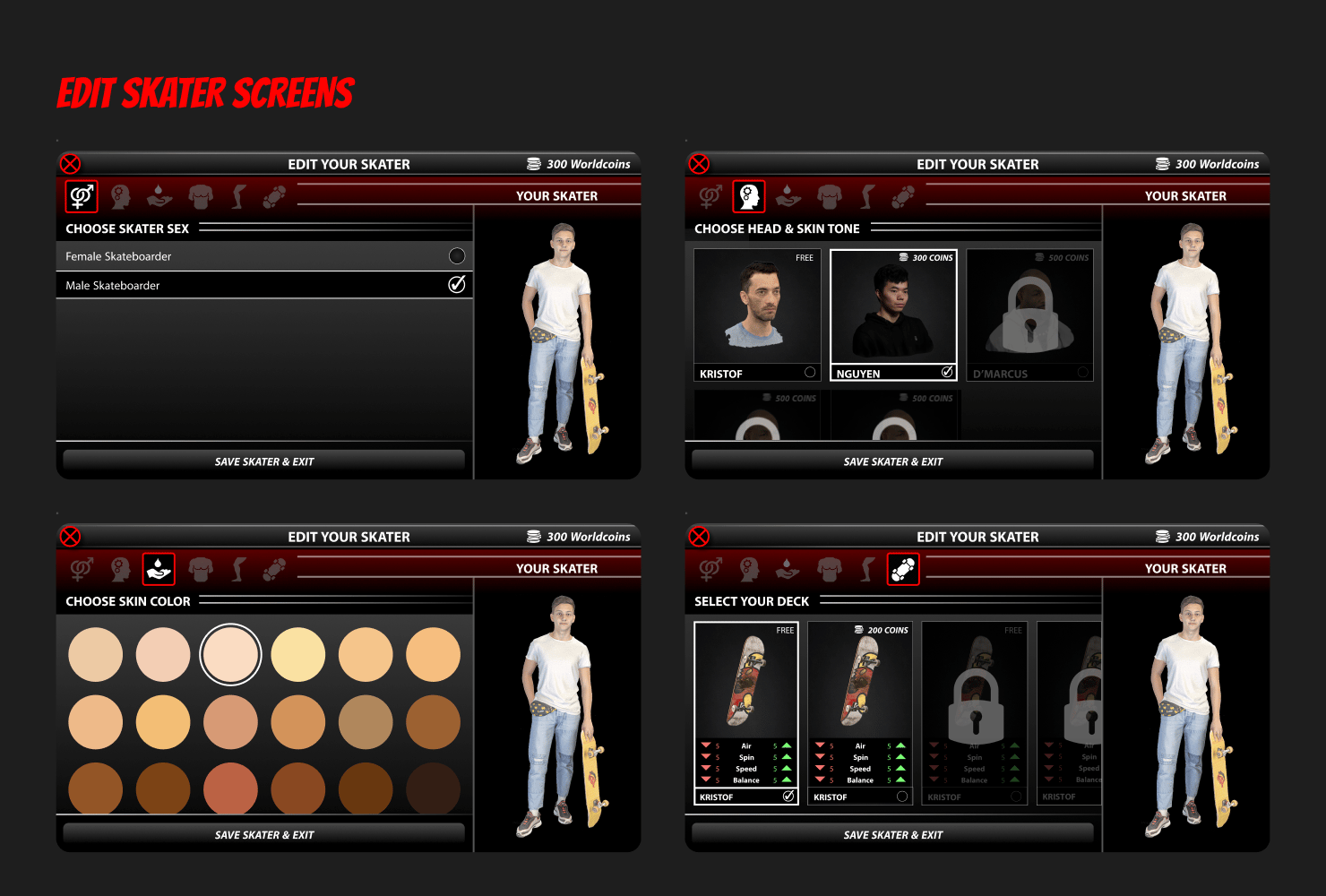
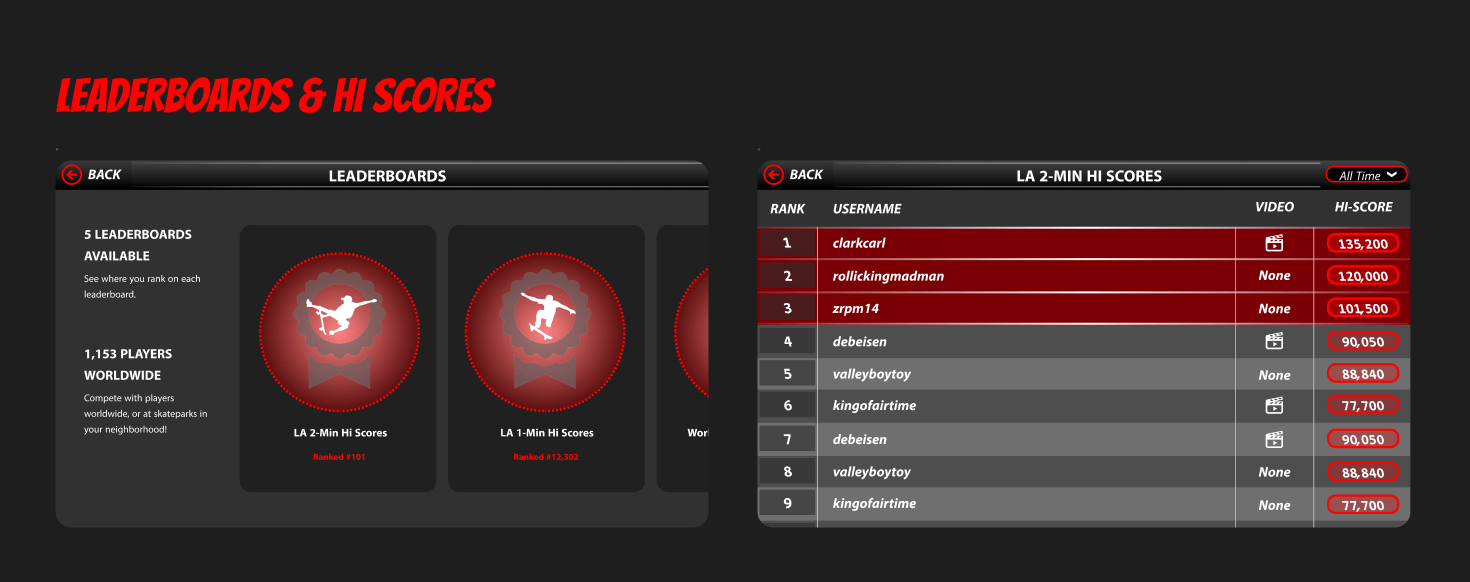
The goal was not to simulate skateboarding perfectly, but to capture its core appeal — movement, creativity, and competition — in a way that worked within the constrained UI of a mobile phone.Keeping this in mind, I worked through creating the Worldpark interface. Below you can find designs for some of the key screens...
Prototyping, Playtesting, & Iteration
With the core concept defined and the UI designed, my focus shifted towards getting the app developed into a working prototype. It was at this point that I brought on my project partners for development to help bring Worldpark to life.
In close collaboration with Philip, both UI and gameplay mechanics were implemented and tested iteratively. Philip and I would typically meet once a day or once every other day to discuss development progress, and I would give feedback that informed his next decisions/directions.
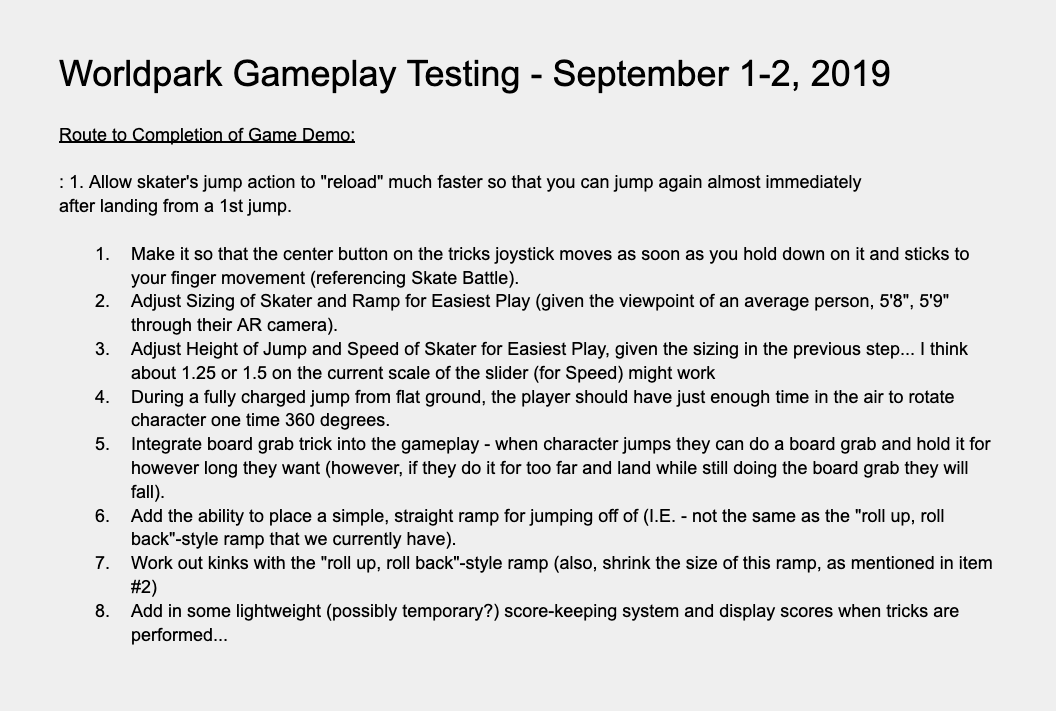
This phase involved hands-on playtesting, bug tracking, and repeated tuning to make the game feel playable rather than experimental. Issues like jump reload timing, trick recognition, and scoring balance were addressed through repeated testing sessions.
Partnerships & Continued Development
Worldpark eventually entered a phase involving external partners and more formal collaboration structures. Contracts and operational logistics became a larger part of the project’s day-to-day reality, including a development partnership with an outside development group, Napollo Sofware.
While these partnerships offered potential upside, they also introduced coordination overhead and strategic risk. Managing relationships, expectations, and ownership added complexity beyond the core product challenges. - This was a big learning period for me as a project manager.
During this time we had meetings and explored partnerships with Napollo Software, Element Skateboards, and Niantic Labs.
Final Work & Prototype
In late 2021-early 2022, our development priorities had begun to shift towards another augmented reality service we were working on part time. There were also some technical issues with the state of AR meshing systems at this point in time that were causing us significant problems, and this helped lead our decision making.Despite this, as a team we pulled together an advanced demo of the service and platform functioning, and we were all proud of what we accomplished with it.
Outcomes
- A fully working prototype of Worldpark with many of the gameplay systems and UIs was created.
- We secured angel investment for the project.
- We interacted with multiple outside partners/vendors, and I gained a lot of experiencing managing forward progress on a software project with a small team.
Key Learnings
- Gameplay design & development should be shared or kept closely knit together on a small team.
- Reliance on 3rd-party technology stacks and outside partners can be strategically risky.
- Making progress on complex software projects requires team to commit to consistent meetings every couple of days at the least, to help keep strategy aligned.
Worldpark
A mobile AR skateboarding game that I led the design and management of. Our goal was to explore how real-world physical activity, user-generated environments, and gameplay systems could work together in augmented reality.
Role: UI/UX Design, Project Manager
Year: 2019-2021
Collaborators: Philip Hahs, Farshid Hamidi,
Richard Lapham
Role & Team Structure
I defined the initial product vision and scope for Worldpark while also designing the core UX flows, gameplay systems, and scoring mechanics. I coordinated engineering priorities, set meetings, and made tradeoffs to keep the project focused and feasible within the constraints of AR hardware and a small team.
For development of the app, Philip Hahs & Richard Lapham came onboard to create the front-end gameplay and UI implementation, while Farshid Hamidi worked on back-end systems, database and infrastructure. As a small, execution-constrained team, design and project management decisions were closely intertwined throughout development.
Context & Early Direction
Worldpark did not begin as a skateboarding game. Early exploration focused on a wide range of AR-native game ideas that were documented with wireframes and notes.
Through research and experimentation, skateboarding emerged as a well grounded game mechanic for AR: it naturally combined physical movement, measurable skill, and location-based play.
Worldpark Concept Takes Shape
Out of this initial stage of ideating around potential AR game concepts, came the concept for Worldpark. Augmented reality and skateboarding seemed like a perfect match, since if you were to go out and go somewhere to play an AR skateboarding game somewhere, it would closely match the experience of a real skateboarder going out to find the perfect skate spot.
This seemed like a good direction, so I proceeded to come up with a game document describing the features it should have.
Creating The Worldpark Interface
Now that Worldpark had solidified into a defined product, it was time to move into the design phase.
The goal was not to simulate skateboarding perfectly, but to capture its core appeal — movement, creativity, and competition — in a way that worked within the constrained UI of a mobile phone.Keeping this in mind, I worked through creating the Worldpark interface. Below you can find designs for some of the key screens...
Prototyping, Playtesting, & Iteration
With the core concept defined and the UI designed, my focus shifted towards getting the app developed into a working prototype. It was at this point that I brought on my project partners for development to help bring Worldpark to life.
In close collaboration with Philip, both UI and gameplay mechanics were implemented and tested iteratively. Philip and I would typically meet once a day or once every other day to discuss development progress, and I would give feedback that informed his next decisions/directions.
This phase involved hands-on playtesting, bug tracking, and repeated tuning to make the game feel playable rather than experimental. Issues like jump reload timing, trick recognition, and scoring balance were addressed through repeated testing sessions.
Partnerships & Continued Development
Worldpark eventually entered a phase involving external partners and more formal collaboration structures. Contracts and operational logistics became a larger part of the project’s day-to-day reality, including a development partnership with an outside development group, Napollo Sofware.
While these partnerships offered potential upside, they also introduced coordination overhead and strategic risk. Managing relationships, expectations, and ownership added complexity beyond the core product challenges. - This was a big learning period for me as a project manager.
During this time we had meetings and explored partnerships with Napollo Software, Element Skateboards, and Niantic Labs.
Final Work & Prototype
In late 2021-early 2022, our development priorities had begun to shift towards another augmented reality service we were working on part time. There were also some technical issues with the state of AR meshing systems at this point in time that were causing us significant problems, and this helped lead our decision making.Despite this, as a team we pulled together an advanced demo of the service and platform functioning, and we were all proud of what we accomplished with it.
Outcomes
- A fully working prototype of Worldpark with many of the gameplay systems and UIs was created.
- We secured angel investment for the project.
- We interacted with multiple outside partners/vendors, and I gained a lot of experiencing managing forward progress on a software project with a small team.
Key Learnings
- Gameplay design & development should be shared or kept closely knit together on a small team.
- Reliance on 3rd-party technology stacks and outside partners can be strategically risky.
- Making progress on complex software projects requires team to commit to consistent meetings every couple of days at the least, to help keep strategy aligned.
Worldpark
A mobile AR skateboarding game that I led the design and management of. Our goal was to explore how real-world physical activity, user-generated environments, and gameplay systems could work together in augmented reality.
Role: UI/UX Design, Project Manager
Year: 2019-2021
Collaborators: Philip Hahs, Farshid Hamidi, Richard Lapham
Role & Team Structure
I defined the initial product vision and scope for Worldpark while also designing the core UX flows, gameplay systems, and scoring mechanics. I coordinated engineering priorities, set meetings, and made tradeoffs to keep the project focused and feasible within the constraints of AR hardware and a small team.
For development of the app, Philip Hahs & Richard Lapham came onboard to create the front-end gameplay and UI implementation, while Farshid Hamidi worked on back-end systems, database and infrastructure. As a small, execution-constrained team, design and project management decisions were closely intertwined throughout development.
Context & Early Direction
Worldpark did not begin as a skateboarding game. Early exploration focused on a wide range of AR-native game ideas that were documented with wireframes and notes.
Through research and experimentation, skateboarding emerged as a well grounded game mechanic for AR: it naturally combined physical movement, measurable skill, and location-based play.
Worldpark Concept Takes Shape
Out of this initial stage of ideating around potential AR game concepts, came the concept for Worldpark. Augmented reality and skateboarding seemed like a perfect match, since if you were to go out and go somewhere to play an AR skateboarding game somewhere, it would closely match the experience of a real skateboarder going out to find the perfect skate spot.
This seemed like a good direction, so I proceeded to come up with a game document describing the features it should have.
Creating The Worldpark Interface
Now that Worldpark had solidified into a defined product, it was time to move into the design phase.
The goal was not to simulate skateboarding perfectly, but to capture its core appeal — movement, creativity, and competition — in a way that worked within the constrained UI of a mobile phone.Keeping this in mind, I worked through creating the Worldpark interface. Below you can find designs for some of the key screens...
Prototyping, Playtesting, & Iteration
With the core concept defined and the UI designed, my focus shifted towards getting the app developed into a working prototype. It was at this point that I brought on my project partners for development to help bring Worldpark to life.
In close collaboration with Philip, both UI and gameplay mechanics were implemented and tested iteratively. Philip and I would typically meet once a day or once every other day to discuss development progress, and I would give feedback that informed his next decisions/directions.
This phase involved hands-on playtesting, bug tracking, and repeated tuning to make the game feel playable rather than experimental. Issues like jump reload timing, trick recognition, and scoring balance were addressed through repeated testing sessions.
Partnerships & Continued Development
Worldpark eventually entered a phase involving external partners and more formal collaboration structures. Contracts and operational logistics became a larger part of the project’s day-to-day reality, including a development partnership with an outside development group, Napollo Sofware.
While these partnerships offered potential upside, they also introduced coordination overhead and strategic risk. Managing relationships, expectations, and ownership added complexity beyond the core product challenges. - This was a big learning period for me as a project manager.
During this time we had meetings and explored partnerships with Napollo Software, Element Skateboards, and Niantic Labs.
Final Work & Prototype
In late 2021-early 2022, our development priorities had begun to shift towards another augmented reality service we were working on part time. There were also some technical issues with the state of AR meshing systems at this point in time that were causing us significant problems, and this helped lead our decision making.Despite this, as a team we pulled together an advanced demo of the service and platform functioning, and we were all proud of what we accomplished with it.
Outcomes
- A fully working prototype of Worldpark with many of the gameplay systems and UIs was created.
- We secured angel investment for the project.
- We interacted with multiple outside partners/vendors, and I gained a lot of experiencing managing forward progress on a software project with a small team.
Key Learnings
- Gameplay design & development should be shared or kept closely knit together on a small team.
- Reliance on 3rd-party technology stacks and outside partners can be strategically risky.
- Making progress on complex software projects requires team to commit to consistent meetings every couple of days at the least, to help keep strategy aligned.